
electronics-journal.com
09
'26
Written on Modified on
YAGEO launches AC1210 chokes for CAN-FD networks
The compact common-mode chokes ensure reliable EMI suppression for automotive and industrial communication up to 10 Mbit/s.
www.rutronik.com
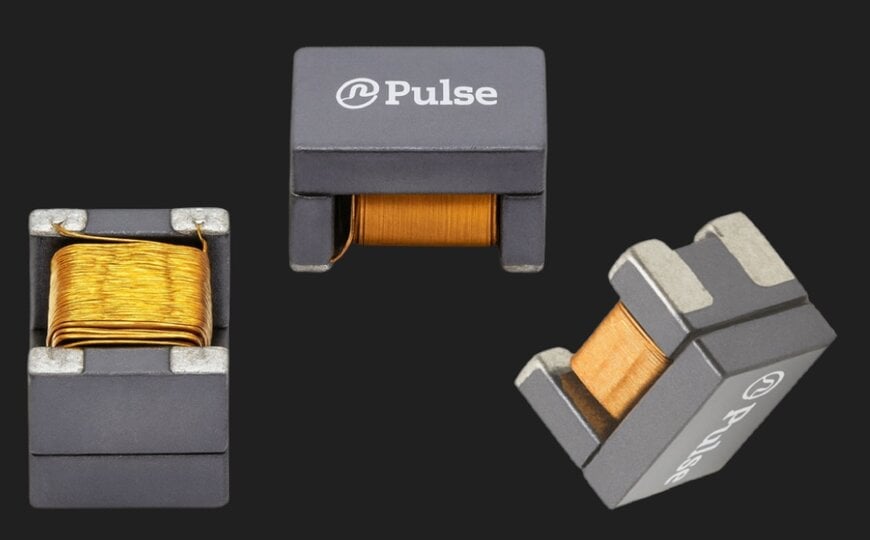
To address the stringent electromagnetic compatibility (EMC) requirements of modern communication systems, the YAGEO Group has introduced the AC1210 Series of CAN-FD common-mode chokes. Available through Rutronik24, these compact, 2-wire components in a 1210 (3225) package are engineered to reliably suppress common-mode noise while withstanding high mechanical stress. As data rates in automotive and industrial networks increase, maintaining signal integrity in environments prone to interference is critical. The new chokes are designed for integration into Advanced Driver Assistance Systems (ADAS), engine control units, camera modules, and complex industrial bus architectures.
Broad interface support and thermal resilience
Designed to support CAN and CAN-FD data rates of up to 10 Mbit/s, the AC1210 Series provides developers with significant flexibility to simplify circuit designs and reduce inventory variants. The chokes are available in inductance values of 11 µH, 22 µH, 51 µH, and 100 µH, accommodating DC loads up to 300 mA. Depending on the specific variant, the components offer an operating temperature range extending from -40 to +125 °C or from -55 to +150 °C. This extreme thermal resilience, combined with a highly vibration- and shock-resistant physical design, ensures stable operation in harsh environmental conditions.
Industry compliance for signal integrity
Ensuring consistent signal quality requires strict adherence to industry EMC protocols. The AC1210 Series is qualified for both automotive and industrial applications, supporting DCMR (Differential to Common Mode Rejection) CAN Class 2 and Class 3. Furthermore, the design complies with major industry standards, including IEC 62228-3 and CiA 110. This high-performance EMI suppression is essential for safeguarding safety-critical vehicle networks—such as airbag modules and tire pressure monitoring systems—from external electromagnetic disruptions that could otherwise compromise operational safety.
Additional Context: Common-mode noise in differential signaling
Controller Area Network (CAN) and CAN-FD buses utilize differential signaling to transmit data over two wires (CAN High and CAN Low). Theoretically, external electromagnetic interference affects both wires equally, allowing the differential receiver to easily cancel out the noise. However, at the higher frequencies and data rates (up to 10 Mbit/s) utilized by CAN-FD, slight physical asymmetries in the wiring harness, connectors, or transceiver chips can convert differential signals into common-mode noise. This conversion leads to severe electromagnetic emissions and reduces the network's immunity to external interference. Common-mode chokes resolve this by presenting a high impedance to common-mode currents (blocking the noise) while exhibiting near-zero impedance to the differential signals (allowing data to pass unimpeded). This mechanism is critical for maintaining robust, deterministic data transmission in electrically noisy environments, such as factory floors or modern automotive chassis packed with high-frequency electronic control units.
Edited by an industrial journalist, Lekshman Ramdas, with AI assistance.
www.rutronik.com
