
electronics-journal.com
06
'26
Written on Modified on
Automated SMT Systems for Electronics Production
ASMPT SMT Solutions introduces updated assembly platforms and automated stencil printing frameworks designed to optimize high-density circuit board production workflows.
smt.asmpt.com
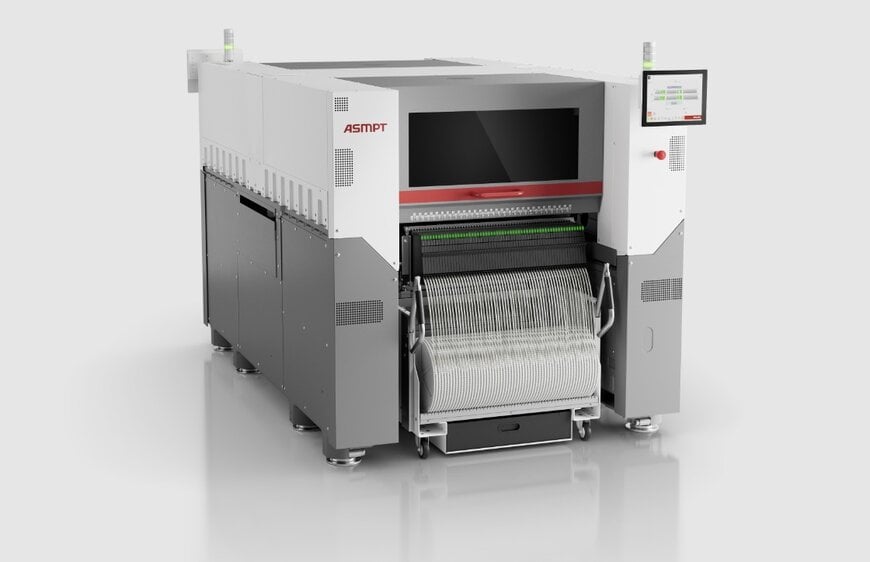
The SIPLACE V L placement platform combines high precision, productivity and flexibility. Image source: ASMPT
ASMPT SMT Solutions is releasing the SIPLACE V assembly platform and the DEK TQ L stencil printer to address the manufacturing requirements of complex electronics, such as artificial intelligence server boards. These systems integrate hardware automation with the WORKS Software Suite to streamline shop floor workflows across surface mount technology (SMT) production lines.
AI Server Board Assembly and Component Miniaturization
The physical demands of artificial intelligence hardware are shifting the requirements for electronics manufacturing, necessitating systems capable of handling large, heavy, high-performance ball grid arrays (BGAs) alongside highly miniaturized components. ASMPT will exhibit at the EFX Expo for Electronics Manufacturing in Stuttgart, Germany, from October 6 to 8, demonstrating the SIPLACE V L platform.
This placement machine is engineered to handle components down to the 016008M metric size factor, as well as odd-shaped components (OSCs) up to 55 millimeters in height. Contained within a 1.5 by 2.4-meter footprint, the system utilizes an interchangeable tray changer and enhanced Smart Pin Support to process oversized circuit boards. By maintaining hardware backward compatibility with existing SIPLACE X feeders and SIPLACE SX changeover tables, the architecture allows electronics manufacturers to utilize existing peripheral tooling. Under standard operational conditions, this updated platform configuration enables productivity increases of up to 30 percent compared to earlier generations.
Wet-Print Accuracy and Automated Stencil Printing Mechanics
For the application of solder paste on mid-size boards, the DEK TQ L stencil printer establishes a core cycle time of 6.5 seconds while maintaining a wet-print accuracy of ±17.0 µm at 2 cpk. Sustaining this throughput and precision relies on several continuous-operation mechanisms designed to minimize machine downtime.
The hardware utilizes a Dual Access Cover that permits paste cartridge replacement without halting active production, alongside an Automated Paste Transfer system that independently routes solder paste to a new stencil. The system incorporates an understencil cleaning mechanism scaled to operate for an entire working shift without manual intervention, while a redesigned mechanical interface reduces squeegee changeover times by up to 20 percent. Future updates via the DEK TQ GO system are planned to fully automate both squeegee and stencil changeovers.
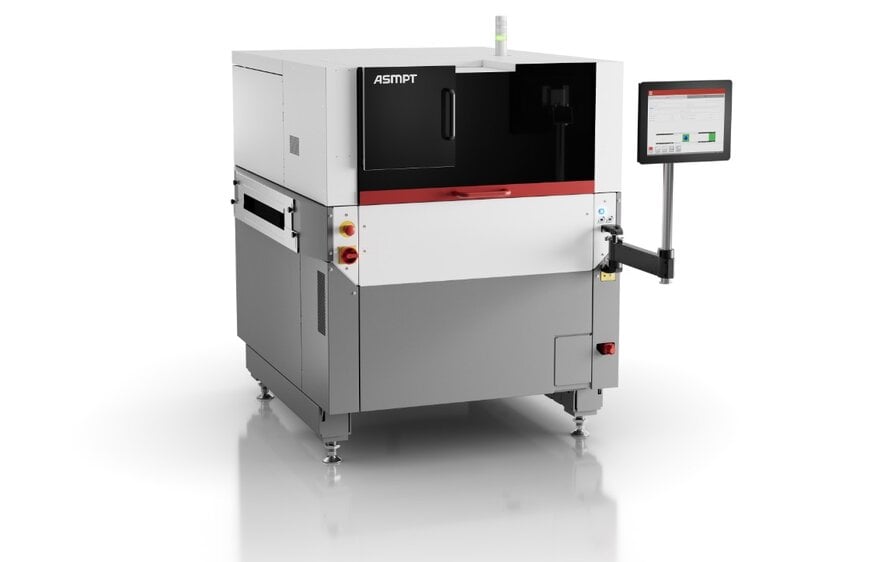
The DEK TQ L stencil printer combines maximum print quality with extensive automation features for the stable solder paste printing of mid-size boards. Image source: ASMPT
Data Interoperability Within the Smart Factory Ecosystem
Physical hardware systems are coordinated through the WORKS Software Suite, a centralized platform for intelligent SMT manufacturing. This digital supply chain architecture aggregates and analyzes data directly from the stencil printer and Solder Paste Inspection (SPI) systems, utilizing algorithmic functions to automatically optimize print quality, process stability, and overall yield.
By functioning as an automotive data ecosystem for the shop floor, the software provides real-time operational transparency across material management, process optimization, and personnel deployment. The architecture utilizes open industry standards, specifically IPC-HERMES-9852 and IPC-CFX, allowing the software to ingest real-time data from third-party equipment and coordinate material logistics with autonomous mobile robots (AMRs) seamlessly.
Additional Context
This section details technical specifications and competitive benchmarking not included in the original news release.
Within the high-speed SMT placement sector, equipment is generally benchmarked on components per hour (CPH), placement accuracy, and floor space utilization. Competitors such as Panasonic (with the NPM series) and Fuji (with the NXT modular series) utilize highly scalable architectures tailored for high-mix, low-volume (HMLV) or ultra-high-volume manufacturing environments. A core technical differentiator in the mid-to-high volume printing bracket is the ±17.0 µm accuracy at 2 cpk, a metric strictly required for assembling ultra-fine-pitch components like 016008M chip resistors without bridging or insufficient solder defects. Furthermore, while native integration of the IPC-CFX (Connected Factory Exchange) protocol has become an industry baseline for machine-to-machine telemetry, the depth of the integration—such as automated SPI feedback loops that instantly adjust print offsets without human intervention—determines the practical yield improvements in closed-loop SMT lines.
Edited by Aishwarya Mambet, Induportals Editor, with AI assistance.
www.asmpt.com
ASMPT SMT Solutions is releasing the SIPLACE V assembly platform and the DEK TQ L stencil printer to address the manufacturing requirements of complex electronics, such as artificial intelligence server boards. These systems integrate hardware automation with the WORKS Software Suite to streamline shop floor workflows across surface mount technology (SMT) production lines.
AI Server Board Assembly and Component Miniaturization
The physical demands of artificial intelligence hardware are shifting the requirements for electronics manufacturing, necessitating systems capable of handling large, heavy, high-performance ball grid arrays (BGAs) alongside highly miniaturized components. ASMPT will exhibit at the EFX Expo for Electronics Manufacturing in Stuttgart, Germany, from October 6 to 8, demonstrating the SIPLACE V L platform.
This placement machine is engineered to handle components down to the 016008M metric size factor, as well as odd-shaped components (OSCs) up to 55 millimeters in height. Contained within a 1.5 by 2.4-meter footprint, the system utilizes an interchangeable tray changer and enhanced Smart Pin Support to process oversized circuit boards. By maintaining hardware backward compatibility with existing SIPLACE X feeders and SIPLACE SX changeover tables, the architecture allows electronics manufacturers to utilize existing peripheral tooling. Under standard operational conditions, this updated platform configuration enables productivity increases of up to 30 percent compared to earlier generations.
Wet-Print Accuracy and Automated Stencil Printing Mechanics
For the application of solder paste on mid-size boards, the DEK TQ L stencil printer establishes a core cycle time of 6.5 seconds while maintaining a wet-print accuracy of ±17.0 µm at 2 cpk. Sustaining this throughput and precision relies on several continuous-operation mechanisms designed to minimize machine downtime.
The hardware utilizes a Dual Access Cover that permits paste cartridge replacement without halting active production, alongside an Automated Paste Transfer system that independently routes solder paste to a new stencil. The system incorporates an understencil cleaning mechanism scaled to operate for an entire working shift without manual intervention, while a redesigned mechanical interface reduces squeegee changeover times by up to 20 percent. Future updates via the DEK TQ GO system are planned to fully automate both squeegee and stencil changeovers.
The DEK TQ L stencil printer combines maximum print quality with extensive automation features for the stable solder paste printing of mid-size boards. Image source: ASMPT
Data Interoperability Within the Smart Factory Ecosystem
Physical hardware systems are coordinated through the WORKS Software Suite, a centralized platform for intelligent SMT manufacturing. This digital supply chain architecture aggregates and analyzes data directly from the stencil printer and Solder Paste Inspection (SPI) systems, utilizing algorithmic functions to automatically optimize print quality, process stability, and overall yield.
By functioning as an automotive data ecosystem for the shop floor, the software provides real-time operational transparency across material management, process optimization, and personnel deployment. The architecture utilizes open industry standards, specifically IPC-HERMES-9852 and IPC-CFX, allowing the software to ingest real-time data from third-party equipment and coordinate material logistics with autonomous mobile robots (AMRs) seamlessly.
Additional Context
This section details technical specifications and competitive benchmarking not included in the original news release.
Within the high-speed SMT placement sector, equipment is generally benchmarked on components per hour (CPH), placement accuracy, and floor space utilization. Competitors such as Panasonic (with the NPM series) and Fuji (with the NXT modular series) utilize highly scalable architectures tailored for high-mix, low-volume (HMLV) or ultra-high-volume manufacturing environments. A core technical differentiator in the mid-to-high volume printing bracket is the ±17.0 µm accuracy at 2 cpk, a metric strictly required for assembling ultra-fine-pitch components like 016008M chip resistors without bridging or insufficient solder defects. Furthermore, while native integration of the IPC-CFX (Connected Factory Exchange) protocol has become an industry baseline for machine-to-machine telemetry, the depth of the integration—such as automated SPI feedback loops that instantly adjust print offsets without human intervention—determines the practical yield improvements in closed-loop SMT lines.
Edited by Aishwarya Mambet, Induportals Editor, with AI assistance.
www.asmpt.com
