
electronics-journal.com
13
'26
Written on Modified on
Closed-Loop Nozzle Monitoring for SMT Production
ASMPT introduced an RFID-based nozzle management system designed to improve process stability, maintenance traceability, and equipment utilization in SMT manufacturing environments.
smt.asmpt.com
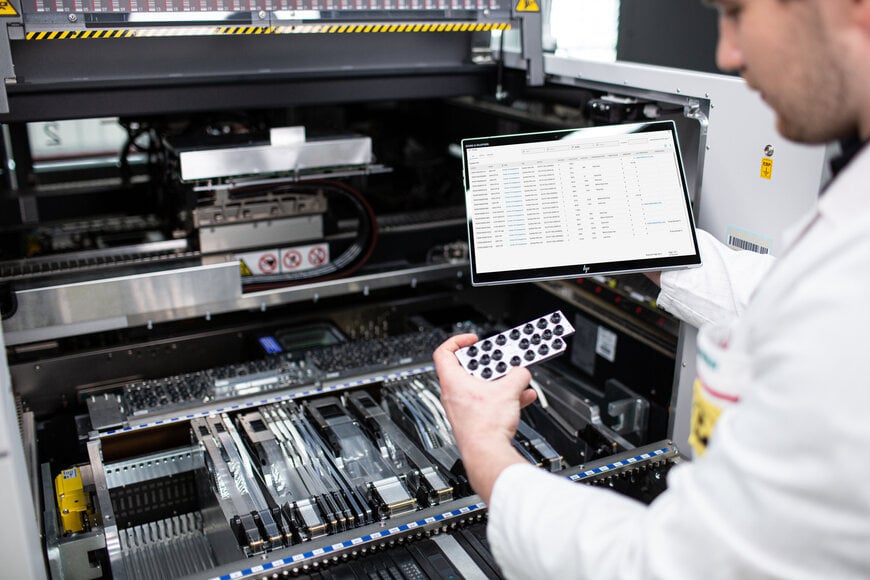
ASMPT SMT Solutions has introduced a closed-loop nozzle management system for surface-mount technology (SMT) manufacturing that combines placement machines, automated cleaning and inspection equipment, and maintenance software into an integrated production network. The system is designed to improve placement reliability, automate nozzle maintenance workflows, and provide continuous life cycle tracking for high-volume electronics manufacturing operations.
The technology targets electronics manufacturing environments where nozzle condition directly affects placement accuracy, process stability, and product quality. In high-speed SMT placement systems, nozzles are the only machine components that physically contact electronic parts during placement. Their condition therefore has a measurable impact on pickup performance, alignment accuracy, and defect rates across the digital supply chain.
RFID-based nozzle traceability
ASMPT equips its “smart nozzles” with RFID tags and individual identifiers to support continuous traceability throughout each nozzle’s operational life. When a SIPLACE placement head loads a nozzle, the system automatically reads the nozzle ID and transfers the information to the Factory Equipment Center asset and maintenance management software.
The software creates a digital record for every nozzle and continuously updates operational data throughout the component’s service life. According to ASMPT, nozzle service life typically ranges from several months to one year, depending on application requirements and production intensity. In larger SMT factories, more than 10,000 nozzles may be deployed simultaneously, making manual maintenance tracking increasingly difficult.
During operation, SIPLACE placement machines continuously monitor nozzle usage counts and perform optical inspections intended to identify contamination, wear, or physical damage. If contamination levels exceed predefined thresholds or defects are detected, the affected nozzle is blocked from production use across the factory network. The corresponding operational and maintenance data is logged within the Factory Equipment Center software platform.
Closed-loop maintenance workflow
The maintenance architecture uses production data to trigger cleaning and replacement actions only when required. Based on machine-generated status information, the Factory Equipment Center software instructs operators to remove nozzle magazines that require servicing and replace them with production-ready magazines.
The removed magazines are transferred to the Smart Nozzle Station, ASMPT’s automated cleaning and inspection system. The station cleans nozzles using water and ultrasound rather than chemical solvents, followed by an automated inspection process to determine whether the nozzles remain suitable for production use.
If a nozzle passes inspection, the system marks it as deployable and returns it to the production inventory. Damaged or worn nozzles are automatically replaced from an integrated storage depot, allowing each magazine leaving the station to return to the line in fully operational condition. Updated status information is then transmitted back to the Factory Equipment Center software, which either releases or blocks the nozzle for production use, completing the closed-loop maintenance cycle.
Throughput and compatibility specifications
ASMPT stated that the Smart Nozzle Station can process up to 20 nozzle magazines containing both smart nozzles and conventional nozzles from the 4xxx, 6xxx, and 20xx series. The cleaning and inspection cycle averages approximately 20 seconds per nozzle.
The integrated replacement depot can store up to 120 new nozzles for automated exchange operations. Because the cleaning process uses water and ultrasound instead of solvents, the system does not require specialized solvent disposal procedures for wastewater handling.
The nozzle management platform is also designed to support third-party cleaning and inspection systems, provided that nozzle condition data can be transferred into the Factory Equipment Center software. ASMPT positions this interoperability as part of its broader automotive data ecosystem and intelligent factory strategy, where production assets from multiple vendors can exchange operational data within a unified manufacturing environment.
Edited by an industrial journalist Sucithra Mani with AI assistance.
www.asmpt.com
