
electronics-journal.com
09
'26
Written on Modified on
Infineon SiC Technology Powers ADVANTICS’ Megawatt Converters
Collaboration integrates CoolSiC MOSFETs into liquid-cooled modular platforms for heavy-duty EV charging and energy storage.
www.infineon.com
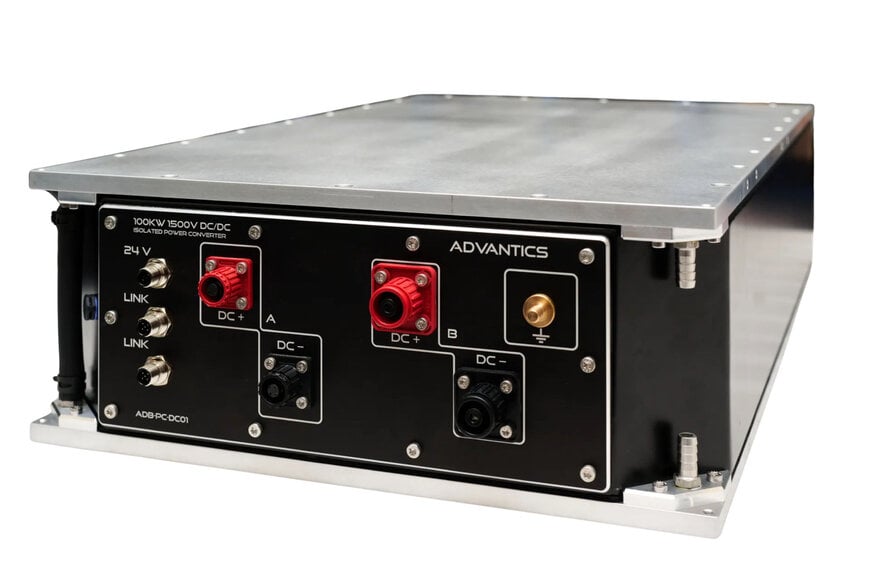
Infineon Technologies AG is supplying its CoolSiC™ 1200 V MOSFETs and EiceDRIVER™ gate drivers to ADVANTICS for a new range of liquid-cooled power converters. These systems are specifically designed for high-power density applications, including Megawatt Charging Systems (MCS) for heavy-duty trucking, marine electrification, and DC microgrids for data centers. By leveraging Silicon Carbide (SiC) technology, the partnership aims to overcome the charging speed limitations currently hindering the decarbonization of heavy industrial transport.
Technical Platform Architecture
ADVANTICS’ conversion platform utilizes a modular approach to reach high-power output levels:
- Scalable Building Blocks: Each unit is based on 100 kW modular blocks, allowing for flexible system scaling up to the megawatt range.
- Performance Metrics: The converters achieve a peak efficiency of 98.5% and support wide voltage ranges up to 1500 V, facilitating bidirectional power flow between grids and storage systems.
- Thermal Management: The integration of liquid cooling is critical for maintaining high power density within the compact modules, ensuring long-term reliability in demanding industrial environments.
Strategic Impact on Infrastructure Electrification
The shift to MCS technology is essential for sectors where traditional charging speeds are insufficient. By utilizing SiC power semiconductors, the system enables:
The shift to MCS technology is essential for sectors where traditional charging speeds are insufficient. By utilizing SiC power semiconductors, the system enables:
- Faster Charging: Achieving speeds up to ten times faster than current standard infrastructure for heavy-duty vehicles.
- Grid Compatibility: Facilitating seamless integration between high-power grid connections, battery storage assets, and charging terminals.
- Sustainability: Directly supporting the electrification of "hard-to-abate" sectors such as long-haul trucking, mining, and maritime transport.
Additional Context: The role of SiC in Megawatt Charging
Megawatt-level charging requires power semiconductors that can switch at high frequencies while minimizing switching losses. Silicon (Si) Insulated Gate Bipolar Transistors (IGBTs) are typically limited by significant heat generation at these frequencies, requiring bulky passive cooling components. Infineon’s CoolSiC™ MOSFETs, however, feature a wide bandgap material that allows for much lower "on-resistance" and faster switching transitions. In a 100 kW modular block, this reduction in switching losses is the primary driver for achieving the 98.5% efficiency rating. Furthermore, because the SiC modules generate less waste heat, the cooling infrastructure (pumps, radiators, and coolant volume) can be significantly downsized, contributing to the overall compact footprint of the ADVANTICS converter units. This efficiency gain is not just a performance metric; it directly lowers the operational cost of the charging station by reducing the "energy overhead" consumed by the charger's internal electronics.
Edited by Lekshman Ramdas, Induportals editor – adapted by AI.
www.infineon.com
Megawatt-level charging requires power semiconductors that can switch at high frequencies while minimizing switching losses. Silicon (Si) Insulated Gate Bipolar Transistors (IGBTs) are typically limited by significant heat generation at these frequencies, requiring bulky passive cooling components. Infineon’s CoolSiC™ MOSFETs, however, feature a wide bandgap material that allows for much lower "on-resistance" and faster switching transitions. In a 100 kW modular block, this reduction in switching losses is the primary driver for achieving the 98.5% efficiency rating. Furthermore, because the SiC modules generate less waste heat, the cooling infrastructure (pumps, radiators, and coolant volume) can be significantly downsized, contributing to the overall compact footprint of the ADVANTICS converter units. This efficiency gain is not just a performance metric; it directly lowers the operational cost of the charging station by reducing the "energy overhead" consumed by the charger's internal electronics.
Edited by Lekshman Ramdas, Induportals editor – adapted by AI.
www.infineon.com
