
electronics-journal.com
29
'26
Written on Modified on
Digital current sensing optimizes signal integrity in automotive traction inverters
Melexis introduces a digital output current sensor to mitigate electromagnetic interference within high-power electric vehicle powertrains.
www.melexis.com
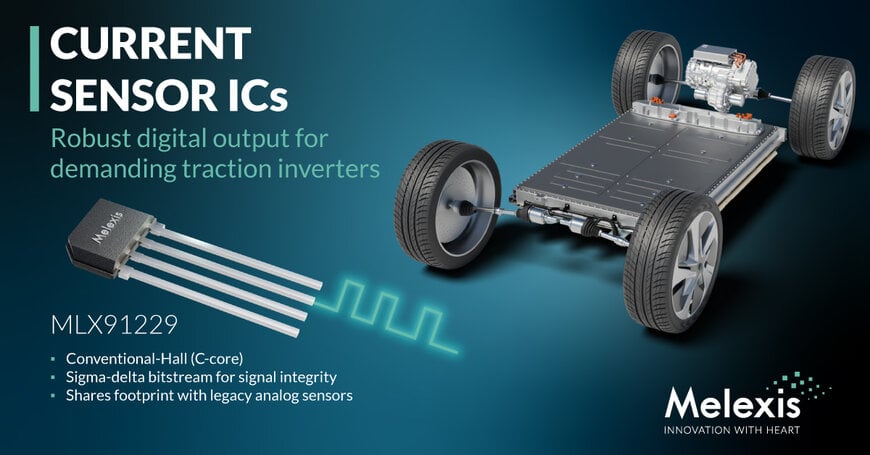
An advanced digital current sensor architecture integrates localized data encoding into automotive power electronics to reduce signal path degradation. The system optimizes telemetry robustness within high-voltage traction inverters and electric vehicle subsystems facing severe electromagnetic noise.
Digital transmission architecture and noise mitigation
High-voltage automotive powertrains utilizing fast-switching silicon carbide and gallium nitride power semiconductors generate substantial electromagnetic interference. This electrical noise induces measurement errors across conventional analog signal paths between current sensors and microcontrollers, particularly over extended printed circuit board traces.
The integration of a sigma-delta digital bitstream converts measured current levels, ranging from 200 A to 2000 A, into a pulse-density modulated signal rather than variable voltage levels. This digital transition provides a distinct noise margin that preserves telemetry accuracy against coupled external disturbances. The architecture enables configurable demodulation strategies at the microcontroller level, allowing engineering parameters to balance operational bandwidth, response times, and noise filtering based on specific automotive data ecosystem requirements.
Infrastructure integration and deployment flexibility
The mechanical footprint of the sensor matches standard analog Hall-effect solutions, allowing direct physical replacement without redesigning existing power electronics layouts. This hardware compatibility simplifies implementation into traction inverters and high-power digital supply chain environments.
By executing analog-to-digital conversion directly at the sensing node, the system removes the requirement for complex analog filtering networks near the receiving microcontroller. This approach maintains system stability and enhances fault detection capabilities by preventing data loss or signal degradation during transient high-current events.
Additional Context:
This section details technical specifications and competitive benchmarking not included in the original product announcement
Conventional analog Hall-effect current sensors exhibit structural vulnerability to high-frequency electromagnetic fields, often requiring heavy shielding or differential filtering to maintain signal integrity. Shunt-based current measurement solutions provide exceptional linear accuracy but introduce galvanic isolation complexities and thermal dissipation losses at high currents reaching 2000 A. The implementation of a localized sigma-delta bitstream output offers the high galvanic isolation inherent to magnetic sensing while matching the noise immunity of isolated digital modulators, avoiding the added component footprint and insertion losses typical of alternative architectures.
Edited by Sucithra Mani, Induportals editor – adapted by AI.
www.melexis.com
