
electronics-journal.com
13
'26
Written on Modified on
Siemens Introduces AI-Based Semiconductor Characterization Software
Solido Characterizer accelerates Liberty file generation and SPICE-based library development for advanced semiconductor process nodes.
www.siemens.com
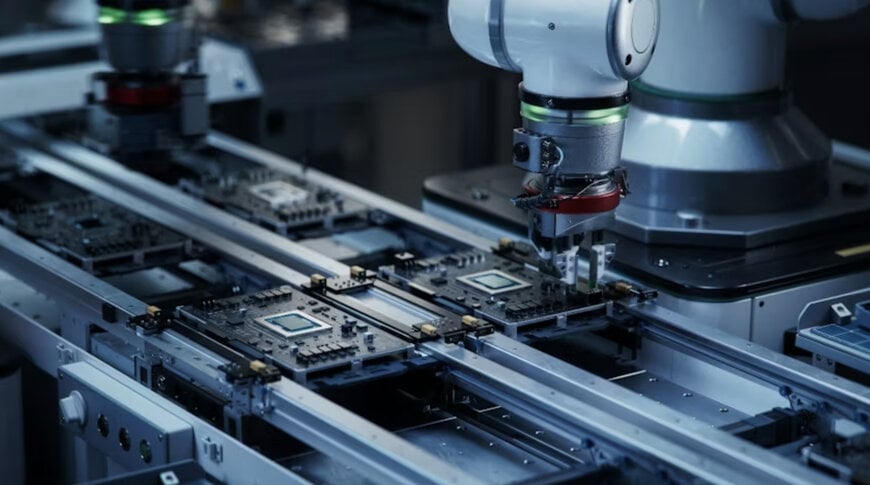
Siemens Digital Industries Software has launched Solido Characterizer, a new AI-driven software platform designed to accelerate semiconductor library characterization workflows across mature and advanced process nodes. The software is part of the Solido Characterization Suite and targets foundries and integrated circuit design teams developing SPICE-based Liberty timing and power libraries for semiconductor devices.
The announcement reflects increasing industry demand for faster characterization processes as semiconductor designs become more complex and process technologies introduce tighter electrical margins, larger corner counts, and advanced modeling formats such as Liberty Variation Format.
AI acceleration for Liberty file generation
Library characterization is a critical stage in semiconductor development where timing, power, and variation models are generated for use in electronic design automation workflows. These Liberty files are used throughout chip implementation and verification processes to model cell behavior under different voltage, temperature, and process conditions.
According to Siemens, Solido Characterizer uses predictive AI techniques to accelerate multi-PVT characterization and advanced LVF generation, reducing Liberty file generation time from weeks to days. The company stated that the software delivers up to seven times greater throughput through a combination of AI-based characterization engines and AI-accelerated simulation technology.
The characterization engine reportedly provides up to a fivefold speed increase for silicon characterization tasks, while the Solido LibSPICE simulator contributes an additional twofold performance improvement. Siemens stated that the combined approach maintains production-level SPICE correlation accuracy while improving characterization scalability across different semiconductor nodes.
AI-driven workflows for semiconductor design
The software integrates with Solido Analytics to provide real-time quality assurance monitoring, resource tracking, debugging support, and automated rerun management during characterization workflows.
Semiconductor characterization complexity continues to increase as advanced process technologies introduce larger model datasets, more operating corners, and tighter validation requirements. AI-assisted automation is increasingly being adopted within EDA environments to reduce simulation overhead and accelerate design iteration cycles.
Solido Characterizer also integrates with the Fuse EDA AI system to support generative and agentic AI workflows across characterization tasks. Siemens stated that the platform can operate together with Solido Generator, which uses baseline Liberty data to train AI models capable of generating additional library views without requiring full SPICE simulation.
Such approaches are intended to reduce characterization bottlenecks in advanced semiconductor design flows where multiple IP blocks and large design teams require rapid access to signoff-ready libraries.
Support for advanced process technologies
The software is designed to support characterization requirements across a wide range of semiconductor technologies, including mature nodes and advanced manufacturing processes.
Advanced semiconductor nodes require increasingly detailed characterization because shrinking geometries and tighter electrical tolerances make circuit performance more sensitive to process variation, voltage fluctuation, and thermal effects. LVF modeling techniques are increasingly used to capture statistical timing variation in advanced integrated circuit designs.
Siemens stated that Solido Characterizer is intended to support scalable characterization workflows for organizations managing multiple design groups and large IP portfolios simultaneously.
Industry deployment and verification
GlobalFoundries stated that its internal deployment of the Solido Characterization Suite enabled the creation of production-quality Liberty files and design margins while maintaining SPICE correlation accuracy. According to the company, the characterization workflow achieved internal speed improvements of approximately 20 to 30 percent.
Anatrix Inc. also referenced use of Siemens EDA tools in characterization workflows for radiation-hardened digital gate libraries and analog mixed-signal IP verification.
Semiconductor AI and EDA automation trends
AI integration within electronic design automation workflows is expanding rapidly as semiconductor companies seek to reduce development time and manage increasing design complexity associated with AI accelerators, high-performance computing devices, automotive electronics, and advanced communication systems.
Characterization workflows are among the most computationally intensive portions of semiconductor library development because they require large-scale SPICE simulation across numerous process and environmental conditions. AI-assisted characterization platforms aim to reduce these computational demands while maintaining signoff-level modeling accuracy.
Siemens stated that Solido Characterizer is available immediately and will be demonstrated during the company’s U2U EU event taking place on 12 May 2026 in Munich, Germany.
Edited by Natania Lyngdoh, Induportals Editor, with AI assistance.
www.siemens.com
