
electronics-journal.com
16
'26
Written on Modified on
Radiation-Hardened Semiconductors Validate Performance in Deep Space
Infineon components supported Artemis II mission systems, demonstrating reliability in power, control, and communication electronics under prolonged radiation exposure conditions.
www.infineon.com
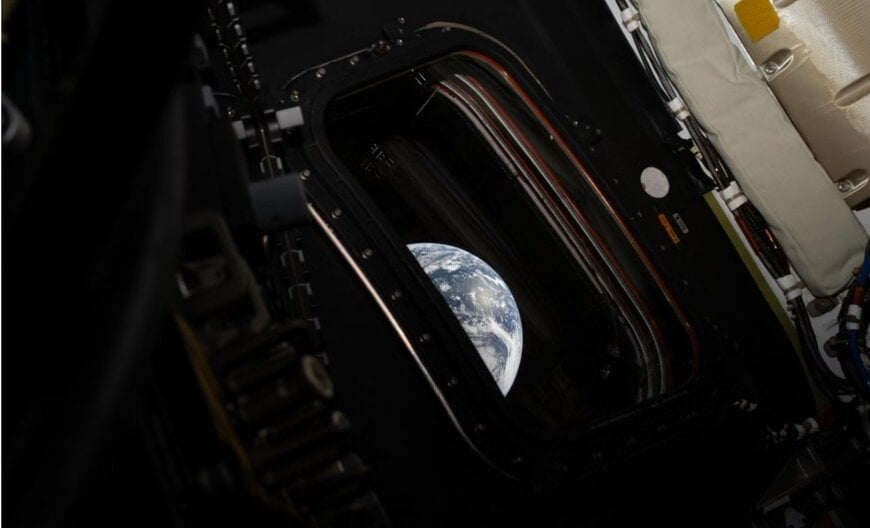
Semiconductor reliability in deep space environments is defined by resistance to radiation, thermal stress, and long mission durations. In this context, Infineon’s radiation-hardened devices were deployed across critical systems in NASA’s Orion capsule during the Artemis II mission.
Proven operation across a ten-day lunar mission
The Artemis II mission completed a ten-day flight, during which the Orion spacecraft traveled beyond low Earth orbit and approached the Moon. Throughout the mission, Infineon’s radiation-hardened components supported onboard power supply, control, and communication systems without reported performance degradation.
These devices were integrated into the spacecraft’s electronic infrastructure, where consistent operation is required despite exposure to high-energy particle radiation outside Earth’s magnetic field. Such conditions can induce single-event effects and long-term degradation in standard semiconductor devices, making radiation tolerance a primary design requirement.
Radiation resistance engineered at the device level
Rather than relying solely on shielding, Infineon’s approach focuses on semiconductor architectures designed to withstand radiation effects. This includes mitigation of charge accumulation and displacement damage mechanisms that can lead to functional failure.
The devices are qualified to established space-grade standards, including MIL-PRF-38535 Class V, MIL-PRF-19500, ESA ESCC specifications, and NASA EEE-INST-002. These qualification frameworks define electrical performance, screening, and reliability criteria for components used in high-reliability space systems.
Long-term heritage across space missions
Infineon’s radiation-hardened technologies trace back to developments initiated in the 1970s, with deployment across multiple NASA and ESA programs. Over time, these components have been used in navigation satellites, the International Space Station, and exploration missions.
The accumulated operational history reflects the importance of long-term component stability in missions where maintenance or replacement is not feasible. In deep space systems, semiconductor reliability directly affects mission continuity and system redundancy strategies.
System-level optimization for space constraints
In spacecraft design, semiconductor selection influences not only electrical performance but also thermal management, weight, and volume. Infineon’s rad-hard portfolio is developed with a system-level approach, where device design, packaging, and qualification processes are aligned.
This integration supports reduced size and mass of electronic subsystems, which is critical in space missions where payload constraints and power budgets are tightly managed.
Wide-bandgap devices extend power efficiency
The portfolio includes wide-bandgap semiconductor technology based on gallium nitride (GaN), which enables higher switching frequencies, reduced switching losses, and increased power density compared to silicon-based devices.
Infineon’s 100 V GaN transistor is qualified to the JANS standard under MIL-PRF-19500 and is manufactured using internal processes to ensure consistency and traceability. These characteristics support its use in power conversion systems where efficiency and weight reduction are key design parameters.
Broad component coverage for space electronics
The company’s radiation-hardened portfolio includes silicon power MOSFETs, GaN transistors, gate drivers, solid-state relays, memory components, and RF devices. These components are supported by in-house radiation testing and long-term availability programs.
Within the evolving space industry, characterized by increased mission frequency and higher data and power demands, such component ecosystems support the development of reliable electronic architectures for future exploration systems.
Edited by Aishwarya Mambet, Induportals Editor, with AI assistance.
www.infineon.com
