
electronics-journal.com
18
'26
Written on Modified on
Littelfuse launches high-power TVS diodes for HVDC applications
The AK-FB and AK-A series use controlled foldback and low clamping voltages to protect SiC, GaN and Si switches without latch-up in DC systems.
www.littelfuse.com
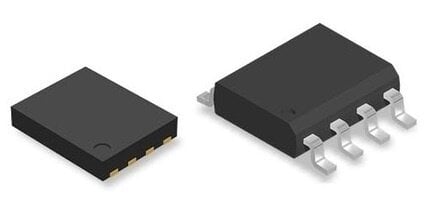
Littelfuse, Inc., an industrial technology company developing solutions for the safe and efficient transmission of electrical energy, has introduced the AK-FB and AK-A series of high-power TVS diodes. They protect high-voltage direct current (HVDC) power electronics from damaging overvoltage transients while providing latch-up-free clamping behaviour. Designed for the surge and switching transient requirements of modern HVDC systems, the diodes protect costly, sensitive semiconductor switches based on silicon carbide (SiC), gallium nitride (GaN) or silicon (Si) without exceeding their absolute maximum ratings.
Controlled foldback and low clamping voltage
The AK-FB series uses Littelfuse's controlled foldback technology. During transients, it maintains an almost constant, very low clamping voltage while ensuring that the minimum snapback voltage (VSB) remains at or above the reverse standoff voltage (VR), which eliminates the risk of latch-up in DC supplies; this also applies to AC applications. The AK-A series is designed to maximise power dissipation across its rated current range. Its clamping voltage is higher than that of the AK-FB series but remains well below conventional TVS diodes and metal oxide varistors (MOVs), giving designers a larger latch-up safety margin. According to Ben Huang, Director Product Management, SBU, at Littelfuse, the two series were developed for the requirements of HVDC applications, enabling high power density designs and helping protect costly, sensitive components such as SiC, GaN or Si switches from damage caused by overvoltage transients.
Current ratings and key features
The AK-FB series is available with peak pulse current (IPP) ratings of 3, 6, 8 and 10 kA, and the AK-A series with ratings of 1, 3 and 6 kA (8/20 µs), all in the same package size across the AK series, with through-hole and surface-mount options. At a rated voltage of 430 V and a peak pulse current of 6,000 A, the AK6-430C-FB limits the voltage to 580 V, compared with 625 V for Littelfuse's existing AK-Y series with standard clamping under the same conditions. Littelfuse describes the clamping voltage as the lowest in the industry, reducing stress on sensitive downstream components and allowing components with lower voltage ratings to be used, which lowers bill-of-materials costs. The design is suited to mission-critical, high-power applications in AC and DC systems.
Applications and availability
Target applications include HVDC converters, battery energy storage systems (BESS), HVDC power supplies for data centres, solid-state transformers (SST) and solid-state circuit breakers (SSCB). The existing AK-Y series remains suitable for high-voltage AC applications such as 48 V telecom power supplies, as well as industrial and aviation systems with lower voltages, while the AK-A and AK-FB series extend the Littelfuse high-power TVS portfolio with the highest voltage ratings currently available and strong latch-up protection for HVDC applications. The AK-FB and AK-A series are available now in bulk packs of 56 pieces, and samples can be requested worldwide through authorised Littelfuse distributors.
Additional Context:
This section explains general principles of transient protection in DC systems not included in the original press release.
TVS diodes protect circuits by conducting strongly once a voltage transient exceeds their breakdown voltage, diverting surge current and limiting, or clamping, the voltage seen by downstream components. The lower the clamping voltage at a given surge current, the less stress is placed on the protected devices.
Some protection devices exhibit snapback, where the voltage across them falls after triggering. In an AC system, the supply voltage regularly passes through zero, which allows a device to return to its blocking state. In a DC system there is no zero crossing, so if the snapback voltage falls below the operating voltage, the device can remain conducting after the transient has passed, a condition known as latch-up.
Edited by an industrial journalist, Lekshman Ramdas, with AI assistance.
www.littelfuse.com
