
EliteSiC M4 Silicon Carbide Platform For Power Systems
onsemi introduces the EliteSiC M4 trench architecture to increase power density and efficiency in electric vehicles and AI data centre power systems.
www.onsemi.com
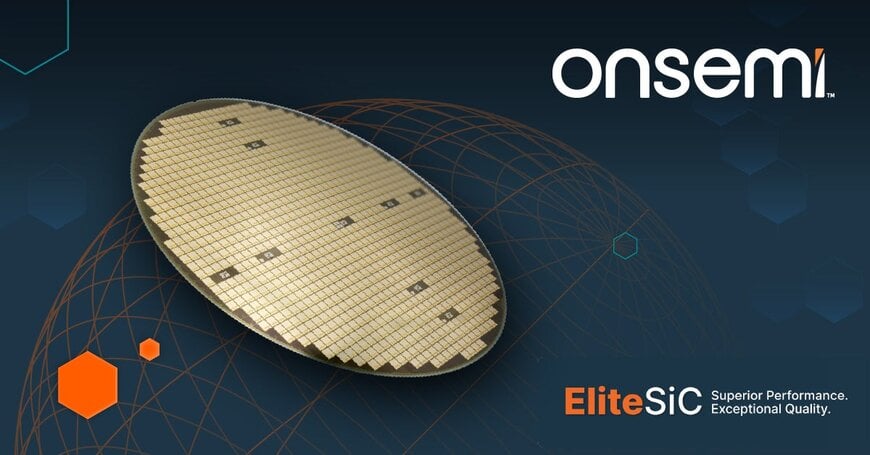
The rapid growth of electrification, artificial intelligence, and energy infrastructure requires power system designers to deliver significantly more power without proportional increases in system size or cooling requirements. To address these spatial and thermal constraints, onsemi has introduced the EliteSiC M4, its fourth-generation silicon carbide platform designed to establish a new performance benchmark for high-density power conversion systems.
Trench Architecture And Switching Performance
The EliteSiC M4 is built on an advanced trench architecture that improves both conduction and switching performance without compromising operational reliability. By reducing specific on-resistance (RSP) by 20 to 50 percent, the platform enables faster switching capabilities. This structural improvement enhances switching figures of merit by 67 percent in hard-switching applications and 50 percent in soft-switching topologies. These reductions in energy loss allow engineers to increase overall power density and efficiency by up to 30 percent while lowering total losses by 35 percent within existing footprint constraints.
Industrial Deployment In Electric Vehicles And Data Centres
Managing higher power levels in space-constrained environments is critical for modern industrial applications. In the automotive sector, the silicon carbide platform allows manufacturers to develop more compact and efficient traction inverters, which directly improves electric vehicle range. Harald Hartel, Vice President of BU eMotor Controls at Schaeffler AG, notes that higher efficiency and power density provide greater flexibility to optimise traction inverters for range, thermal performance, and packaging as electrified powertrains become more demanding. In AI data centres, higher-density power conversion maximises compute capacity per megawatt while reducing the required supporting infrastructure. For broad energy infrastructure, the system effectively reduces conversion losses in solar installations and high-voltage energy storage applications.
Packaging Flexibility And Thermal Reliability
Building on a foundation of more than 16 billion miles of real-world operation, the platform is engineered to support a broad range of packaging options, including top-side-cooled surface-mount packages and high-power modules. To ensure ruggedness in demanding environments, the components hold qualifications supporting operating temperatures of 185 degrees Celsius and above, enabling their deployment in high-voltage automotive and space applications. The EliteSiC M4 750 V bare die, specifically designed for automotive traction inverters, is currently available, with additional product offerings supporting voltages up to 1200 V scheduled for release beginning in 2027.
Additional Context
This section details technical specifications and competitive benchmarking not included in the original product announcement.
The transition from planar to trench silicon carbide (SiC) architectures represents a critical milestone in power electronics, allowing semiconductor manufacturers to pack more active cells into a smaller die area. This reduction in specific on-resistance is strictly required for modern 800 V and 1000 V electric vehicle architectures, where minimising switching losses directly correlates with extended battery range and reduced cooling system weight. In the competitive SiC landscape, major manufacturers similarly prioritise trench designs to maximise power density for automotive traction inverters and megawatt-scale data centre power supply units. Operating at junction temperatures above 175 degrees Celsius has become a standard industry benchmark for aerospace and high-performance automotive applications, ensuring long-term hardware reliability under severe thermal cycling conditions.
Edited by Maria Brueva, Induportals editor – adapted by AI.
