
electronics-journal.com
28
'26
Written on Modified on
Scalable System on Modules and Secure Device Management Platforms
PHYTEC introduces interchangeable processor modules and a centralized cybersecurity monitoring platform to help industrial developers maintain compliance and manage component volatility.
www.phytec.com
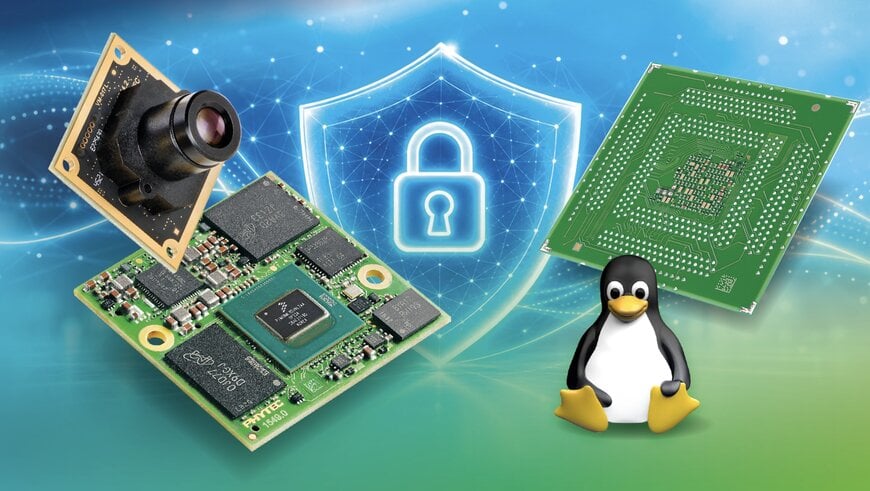
PHYTEC releases an expanded portfolio of pin-compatible System on Modules (SoMs) and a new device management platform named phyHUB, targeting the industrial automation and automotive data ecosystems. These solutions address hardware supply chain constraints and firmware lifecycle management requirements for embedded edge devices.
Addressing Cyber Resilience in Embedded Edge Architectures
At the electronica trade fair, taking place November 10–13 in Munich, Germany, PHYTEC presents hardware and software architectures designed to meet European Cyber Resilience Act (CRA) compliance standards. The foundation of these architectures involves hardware-level security mechanisms, supported by a dedicated provisioning laboratory for cryptographic key generation, secure boot implementation, and encrypted key handling. The company's board support packages (BSPs) integrate these mechanisms to enable secure over-the-air (OTA) updates and long-term device administration. Bodo Huber, Managing Director and CTO at PHYTEC, notes that managing CRA risk assessments and extending hardware lifecycles requires interchangeable module designs paired with centralized software management and proprietary production capabilities.
Centralized Vulnerability Monitoring and Fleet Management
To facilitate continuous software maintenance, PHYTEC introduces phyHUB, a centralized platform for CRA-compliant device management. This system integrates the L-IoT cloud platform, developed in partnership with ML!PA, to provide hosted asset management and device health monitoring. A primary technical function of phyHUB is the automated comparison of newly disclosed Common Vulnerabilities and Exposures (CVEs) against the Software Bill of Materials (SBOM) of deployed edge devices. This capability applies to both proprietary hardware and third-party electronics, allowing administrators to deploy targeted security patches across remote device fleets without replacing physical infrastructure.
Pin-Compatible Processor Modules for Supply Chain Flexibility
The company expands its phyFLEX series of interchangeable System on Modules to include nine distinct processor platforms, adding architectures from NXP, Synaptics, and Qualcomm. Specific additions include modules utilizing the NXP i.MX 937 and i.MX 952 processors, as well as the Synaptics SL2610, configurable with either DDR3 or DDR4 memory. By maintaining pin compatibility across these modules, developers can scale product series or substitute components without redesigning the primary carrier board. This interchangeability serves as a technical safeguard against volatile component availability and fluctuating memory module pricing, ensuring a more resilient digital supply chain.
Edge Artificial Intelligence Integration Platforms
For localized data processing, the company showcases the phyVIP integration platform for embedded vision and edge AI workloads. The system consolidates neural processing units, industrial networking interfaces, and power management onto a single compact board. According to engineering data provided by the manufacturer, utilizing this pre-integrated hardware ecosystem reduces base development timelines by up to 70 percent, facilitating the deployment and optimization of localized machine learning models in medium-volume industrial manufacturing environments.
Additional Context
This section details technical specifications and competitive benchmarking not included in the original news release.
Within the embedded module market, the pin-compatible approach utilized by the phyFLEX series is comparable to standardization strategies seen in Toradex’s Colibri and Apalis module families, or Variscite’s VAR-SOM ecosystem. These competing architectures similarly rely on standardized carrier board interfaces to allow processor upgrades—such as migrating between different NXP i.MX generations—without baseboard redesigns. However, phyHUB’s integration of the L-IoT framework for automated CVE-to-SBOM matching positions it against specialized OTA and fleet management platforms like Mender.io and FoundriesFactory. While platforms like Mender focus primarily on robust A/B partition OTA update mechanisms, systems integrating continuous CVE monitoring directly with hardware provisioning aim to lower the engineering overhead specifically required for emerging CRA compliance in the European market.
Edited by Aishwarya Mambet, Induportals Editor, with AI assistance.
www.phytec.com
