
electronics-journal.com
09
'26
Written on Modified on
High-Airflow Electromagnetic Shielding for Data Centers
Parker Chomerics integrates stainless-steel honeycomb structures to provide component protection and optimal thermal regulation for power-dense telecommunications equipment.
www.parker.com
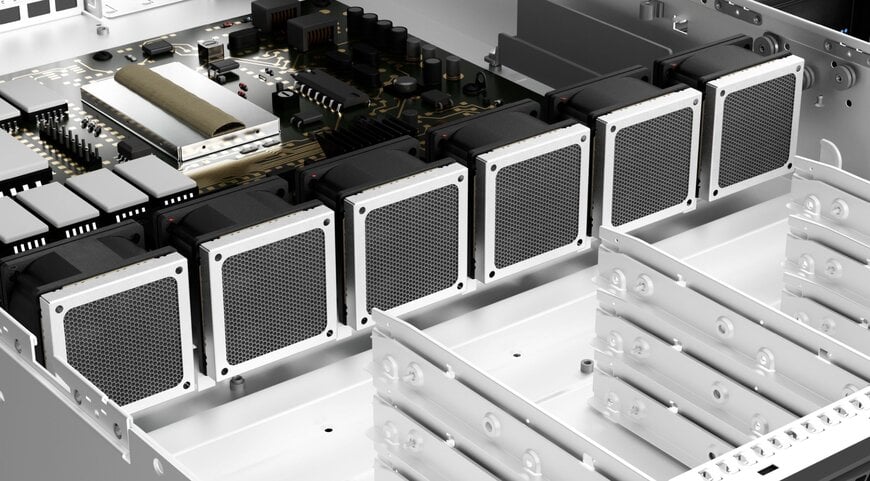
Parker Chomerics is presenting its CHO-STREAMSHIELD stainless-steel honeycomb air-vent panels alongside new thermal interface materials to address electromagnetic interference and heat dissipation in high-density computing environments. The hardware facilitates thermal management and signal integrity for telecommunications, automotive electronics, and server enclosures by maintaining critical airflow while blocking external radio frequencies.
Electromagnetic Shielding and Airflow Optimization
Featured at electronica 2026 (10-13 November, Munich, Germany), the air-vent panels utilize a stainless-steel honeycomb architecture to balance electromagnetic shielding with equipment cooling. As computational hardware in data centers increases in power density, maintaining high-volume airflow is necessary to prevent thermal throttling. The CHO-STREAMSHIELD panels permit up to 96 percent airflow, ensuring continuous ventilation while forming a conductive barrier against electromagnetic interference (EMI) that disrupts electronic system performance. The stainless-steel material provides inherent flame resistance, corrosion prevention, and acoustic noise attenuation without requiring secondary protective coatings.
Automated Manufacturing and Dimensional Control
To meet stringent dimensional tolerances for custom electronic enclosures, the manufacturing process relies on automated laser welding. This joining method minimizes thermal distortion and ensures precise structural integrity across the honeycomb matrix. The production line incorporates automatic optical inspection to detect defects in real time, supported by statistical process control that maintains Process Capability (Cp) and Process Capability Index (Cpk) values above 1.67. This statistical threshold indicates a highly consistent manufacturing variance, allowing the supplier to scale custom dimensional, frame, and gasket configurations from initial prototypes in one week to full production volumes within two to four weeks.
High-Conductivity Thermal Gap Fillers
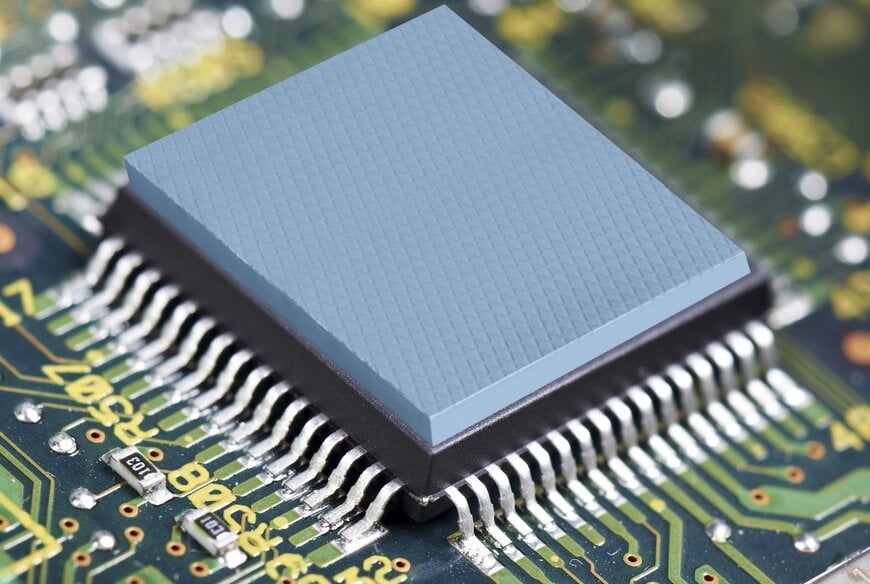
To complement the external enclosure shielding, Parker Chomerics is introducing two internal thermal interface materials designed for physical protection and heat transfer in computing and automotive electronics. The THERM-A-GAP PAD 120LOE delivers a thermal conductivity of 12.0 W/m-K and utilizes a low compressive force formulation to dampen vibration while minimizing silicone oil migration onto printed circuit boards. For applications requiring frequent physical maintenance, the THERM-A-GAP PAD 30RB provides 3.0 W/m-K thermal conductivity with engineered rebound characteristics, enabling repeated compression cycles and reapplication with minimal permanent loss of material thickness.
Additional Context
This section details technical specifications and competitive benchmarking not included in the original news release.
Within the electronic enclosure shielding market, stainless-steel honeycomb vents are typically benchmarked against standard commercial aluminum honeycomb panels, such as those manufactured by Laird Performance Materials or Tech-Etch. While standard aluminum vents can also achieve approximately 95 to 96 percent airflow, bare aluminum is highly susceptible to galvanic corrosion and often requires secondary nickel or tin plating to maintain grounding conductivity over time. Stainless steel inherently provides superior mechanical durability, higher attenuation levels at specific low frequencies, and better environmental resistance in harsh or humid digital infrastructure deployments, albeit at a slightly higher overall component weight. In the thermal interface segment, the THERM-A-GAP PAD 120LOE competes directly with high-tier gap fillers like the Bergquist Gap Pad TGP 12000. Both products target the premium 12.0 W/m-K conductivity threshold required for high-power GPUs and server ASICs, where minimizing thermal resistance and preventing silicone outgassing are critical for long-term reliability.
Edited by Aishwarya Mambet, Induportals Editor, with AI assistance.
www.parker.com
