
electronics-journal.com
19
'26
Written on Modified on
Würth Elektronik Highlights PCB Material Shortages Driven by AI Data Centers
Surging AI demand is tightening supplies of laminates, copper foils and resins, increasing costs, lead times and supply chain risks.
www.we-online.com
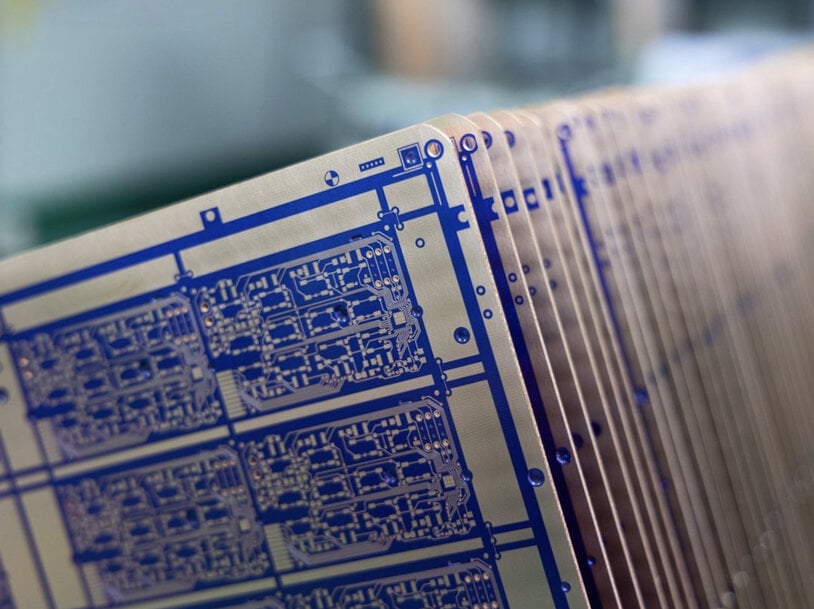
Würth Elektronik GmbH & Co. KG and STARTEAM GLOBAL are jointly deploying advanced procurement frameworks and alternative material qualifications to secure printed circuit board components amid severe global supply bottlenecks. This collaborative approach targets the stabilization of material availability for industrial and automotive application areas heavily affected by the ongoing diversion of production capacity toward high-performance computing infrastructure.
Artificial Intelligence Infrastructure Impact on Laminate Capacity
The rapid expansion of artificial intelligence data centers and high-performance computing systems is driving a significant scarcity of printed circuit board (PCB) base materials. These advanced computational applications demand enormous quantities of high-grade laminates, fundamentally reducing the production capacity available for standard industrial and automotive manufacturing. Artificial intelligence server architectures utilize PCBs with layer counts three to five times higher than conventional designs, pulling high-quality PCB materials away from the broader digital supply chain. Industry analysts project this high-level demand and corresponding supply pressure will persist through the end of 2026.
Raw Material Scarcity and Procurement Strategy Adjustments
The manufacturing sector is facing concurrent shortages across multiple critical raw material categories required for PCB fabrication. Beyond copper-clad laminates (CCL), supply constraints are directly impacting copper foils, high-performance resins, and specific prepregs such as PP1080 and PP2116. Additionally, tooling materials like tungsten carbide, utilized for routing and drilling equipment, are under severe pressure, while fiberglass fabric constraints are expected to extend until 2028. These deficits result in extended lead times, increased pricing volatility, and strict material allocation protocols. Production flexibility is declining because manufacturers have committed long-term capacities to large-scale data center builds, forcing a transition into an allocation-driven economy.
Supply Chain Transparency and Alternative Material Qualification
Securing long-term material allocation requires early procurement planning, accurate demand forecasting, and continuous evaluation of alternative qualified materials to prevent complete supply interruptions. Manuel Mairhofer, Member of the Management Board of Würth Elektronik GmbH & Co. KG, states that close collaboration with customers, material suppliers, and technology partners provides early insights into changes in material availability, manufacturing capacities, and the stability of global supply chains. Daniel Jacob, CEO of STARTEAM GLOBAL, notes that integrating data across the entire supply chain identifies bottlenecks early, allowing for the development of alternative manufacturing solutions to meet the demands of future markets.
Additional Context:
This section details technical specifications and competitive benchmarking not included in the original product announcement
The transition to high-performance computational server architectures has fundamentally altered PCB material consumption metrics. While conventional server motherboards typically require around 18 layers, advanced server architectures utilize boards featuring 32 to over 90 layers. Consequently, a single high-performance server consumes 10 to 15 times the physical board material of a standard server. This shift diverts manufacturing capacity away from standard FR-4 laminates—typically characterized by a dielectric constant (Dk) of 4.2 to 4.5 and a dissipation factor (Df) of 0.018 to 0.025—toward premium low-loss materials. Specialized high-speed laminates, such as PTFE-based composites utilized in advanced data centers, achieve Dk values between 2.2 and 3.5 and Df values as low as 0.0037, which are critical for maintaining signal integrity in high-frequency data transmission. Furthermore, the demand for ultra-low-profile copper foil and Low-Dk glass fabrics has heavily strained upstream raw material supplies. For industries relying on standard or high-Tg FR-4 (150 degrees Celsius to 170 degrees Celsius) for automotive and industrial control systems, this creates a highly competitive allocation environment, necessitating the rapid qualification of alternative dielectric materials and adapted stack-up configurations to maintain production schedules.
Edited by Natania Lyngdoh, Induportals editor, assisted by AI.
www.we-online.com
