
electronics-journal.com
10
'26
Written on Modified on
Würth Elektronik Advances Bio-Based PCB Technology Through Cellutronik Project
This collaborative research project develops bacterial cellulose circuit carriers and additive manufacturing processes for sustainable next-generation printed circuit boards.
www.we-online.com
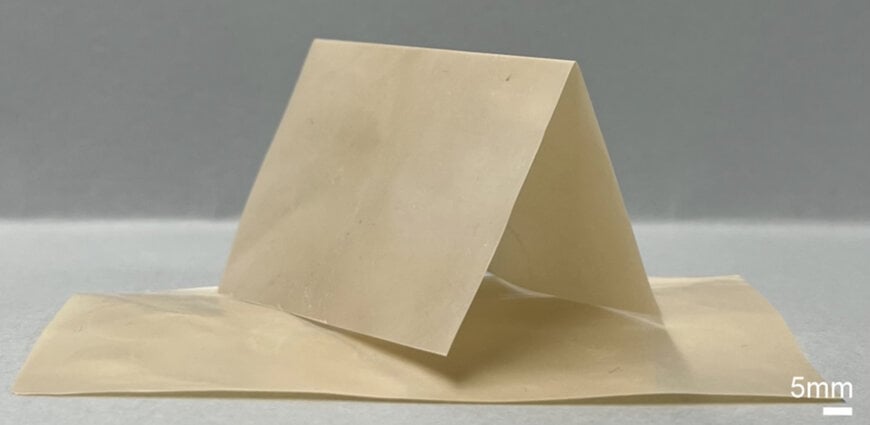
Würth Elektronik Circuit Board Technology, the Institute for Materials Science at the University of Stuttgart, and Hahn-Schickard-Gesellschaft für angewandte Forschung e.V. are cooperating to develop bio-based printed circuit boards. The Cellutronik project focuses on utilizing bacterial cellulose as an alternative substrate material to reduce the environmental footprint of electronic components deployed across industrial automation and digital infrastructure.
Operational Challenges and Cooperative Roles
Conventional printed circuit board manufacturing relies heavily on petroleum-based base materials, presenting material dependency and end-of-life disposal challenges for the electronics industry. To address this structural issue, the consortium initiated the Cellutronik project in November 2025 to research and industrialize alternative biological substrates. The cooperation is necessary to bridge distinct technical domains, combining materials science, additive manufacturing, and large-scale industrial fabrication to ensure the resulting components meet physical production standards.
Technical Solution and Responsibilities
The technical solution replaces traditional fiberglass and epoxy substrates with bacterial cellulose. Derived from agricultural waste, this cellulose is processed into stable, sheet-like structures using targeted microorganisms. The Institute for Materials Science at the University of Stuttgart engineers the synthesis processes required for producing these biological fibers. Hahn-Schickard-Gesellschaft für angewandte Forschung e.V. develops the additive manufacturing methods, applying conductive structures directly onto the cellulose surfaces utilizing digital inkjet printing of copper and silver inks. Würth Elektronik Circuit Board Technology investigates and adapts established manufacturing processes to ensure the biological substrates provide the necessary structural integrity and solderability required for component integration.
Applications and Use Cases
This biological substrate technology targets sectors producing scalable electronic hardware. Concrete technical use cases include the manufacturing of multilayer printed circuit boards where precise additive trace printing replaces traditional subtractive manufacturing. By ensuring the bio-based substrates and printed conductive structures remain solderable, the carriers can be integrated into existing surface-mount technology assembly lines. This provides process stability and maintains standard operational efficiency during hardware production without requiring new assembly infrastructure.
Deployment and Expected Impact
Funded by the German Federal Ministry of Research, Technology and Space, the project is executing laboratory synthesis and industrial feasibility testing. The implementation phases will culminate in a functional demonstrator showcasing multilayer printed circuit boards manufactured through digital printing on bacterial cellulose. The technical mechanism of applying conductive traces precisely where required lowers heavy metal usage and process time. Consequently, the bio-based substrate ensures that hardware achieves a measurable reduction in ecological impact compared to standard petroleum derivatives at the end of the product lifecycle.
Edited by Natania Lyngdoh, Induportals editor, assisted by AI.
www.we-online.com
