
electronics-journal.com
20
'26
Written on Modified on
High Efficiency Point Of Load DC To DC Power Modules
TDK Corporation introduces a compact 3A power module designed to support next generation optical transceivers and artificial intelligence edge computing infrastructure.
www.tdk.com
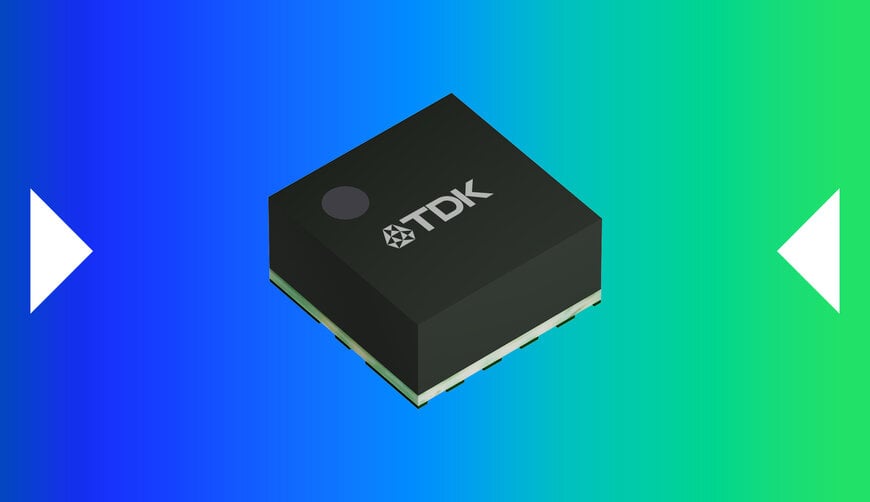
TDK Corporation has expanded its micro POL product line with the introduction of the FS3303, a non-isolated DC-DC power module engineered for space-constrained industrial systems. The hardware solution provides localized voltage regulation for high-speed optical transceivers and edge artificial intelligence platforms where circuit board surface area is restricted.
Technical Architecture and Thermal Performance Mechanics
The power module utilizes proprietary three-dimensional chip-embedded packaging technology to integrate the system controller, driver, MOSFET switches, and the power inductor into a single physical component. This integration yields a structural footprint measuring 2.5 mm by 2.5 mm with a maximum vertical profile height of 1.2 mm. By embedding these components within the internal substrate, the design minimizes parasitic inductance and reduces the necessity for external filtering components.
The device operates across an input voltage range of 2.7 V to 6 V and delivers an adjustable output voltage from 0.4 V to 3.3 V. This voltage flexibility allows the module to supply low-voltage rails for application-specific integrated circuits, systems on chips, and digital signal processors. In terms of thermal performance, the module supplies a continuous 3 A output current at ambient temperatures up to +90 °C, and up to +125 °C with linear electrical derating, while achieving a peak energy efficiency rating of 95%.
Scaling Infrastructure for High-Speed Data Communications
Modern optical networking hardware requires increased power density as data throughput capacities scale from 10 Gbit/s toward 1.6 Tbit/s architectures. The small form factor of the module allows deployment adjacent to the primary processing load, which optimizes transient response times and minimizes voltage drop across the circuit board traces. The manufacturer is expanding this point-of-load converter family to encompass load capacities ranging from 3 A to 80 A with component height profiles restricted between 1.2 mm and 1.7 mm to maintain compatibility with standardized low-profile enclosure requirements.
Additional Context: This section details technical specifications and competitive benchmarking not included in the original product announcement.
The FS3303 micro POL converter competes directly with standard integrated point-of-load power modules in the 3 A to 5 A range. A technical comparison with competing options, such as the Texas Instruments LMZ series or Analog Devices LTM micromodules, highlights distinct differences in volumetric power density. While conventional packages often require a footprint of 3.0 mm x 3.0 mm or larger and profile heights exceeding 1.5 mm, the three-dimensional chip-embedding technology reduces total component volume to 7.5 cubic millimeters. Compared to standard buck regulators utilizing external inductors, this architectural approach reduces total circuit board area requirements by up to 50%. The module also maintains tight output voltage regulation tolerances, which is critical for the rapid transient load steps characteristic of semiconductor chipsets executing edge artificial intelligence workloads.
Edited by Evgeny Churilov, Induportals Media - Adapted by AI.
www.tdk.com
