
electronics-journal.com
22
'26
Written on Modified on
ROHM introduces 5th generation SiC MOSFETs for efficiency
New devices reduce on-resistance by 30% at high temperatures, improving power conversion in EVs, AI servers, and industrial systems.
www.rohm.com
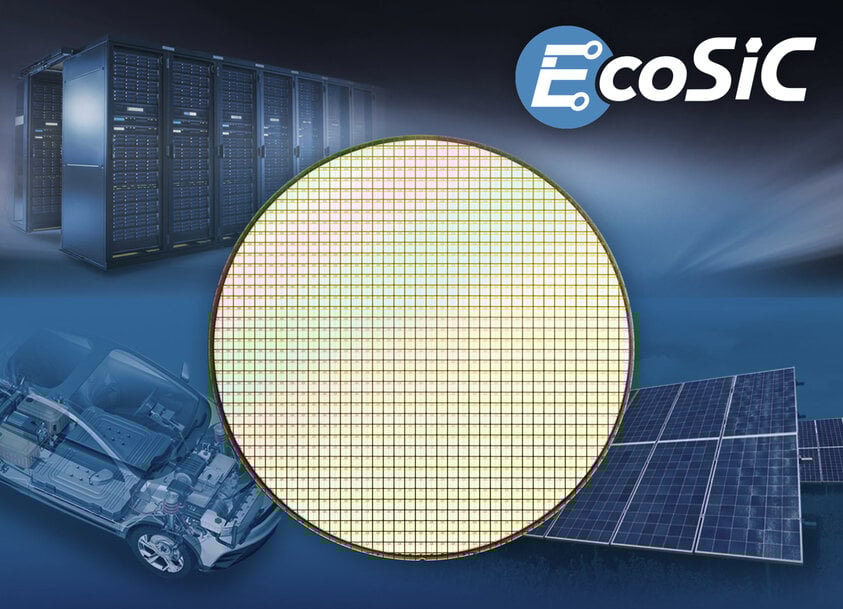
Power electronics, electric mobility, and energy infrastructure are increasingly dependent on high-efficiency semiconductor technologies. In this context, ROHM Co., Ltd. has developed its 5th generation SiC MOSFETs within the EcoSiC™ series, designed to reduce power losses and improve performance in high-power applications such as electric vehicle drivetrains, AI server power supplies, and industrial energy systems.
The new devices build on silicon carbide (SiC) technology, which is gaining adoption due to its ability to handle high voltages, temperatures, and switching frequencies more efficiently than conventional silicon-based components.
Reduced on-resistance for high-temperature operation
A key improvement in the 5th generation SiC MOSFETs is the reduction of ON-resistance by approximately 30% at a junction temperature of 175°C compared to previous 4th generation devices, under equivalent voltage and chip size conditions.
This reduction is achieved through structural enhancements and optimized manufacturing processes, resulting in:
- Lower conduction losses: Improved efficiency in power conversion systems
- Higher power density: Increased output capability within the same footprint
- Enhanced thermal performance: Stable operation in high-temperature environments
These characteristics are particularly relevant for applications such as traction inverters in electric vehicles, where thermal management and efficiency directly impact driving range and system size.
Supporting high-power applications across sectors
The latest SiC MOSFETs are designed for a wide range of applications requiring efficient power conversion:
Supporting high-power applications across sectors
The latest SiC MOSFETs are designed for a wide range of applications requiring efficient power conversion:
- Automotive systems: Traction inverters, onboard chargers (OBCs), DC-DC converters, and electric compressors in xEVs
- Industrial equipment: Power supplies for AI servers and data centers, photovoltaic inverters, and energy storage systems
- Advanced mobility and automation: Applications such as eVTOL systems and AC servo drives
The increasing demand for high-performance computing and electrification is driving the need for components that minimize energy losses while supporting higher power densities.
Addressing energy efficiency challenges in modern infrastructure
The growth of generative AI and data-intensive applications is increasing the energy demands of data centers and industrial systems. At the same time, the integration of renewable energy sources into smart grids requires efficient power conversion and storage technologies.
SiC devices play a critical role in these environments by reducing losses during energy conversion, contributing to more efficient use of available power and supporting stable operation under high load conditions.
Evolution of SiC technology and market adoption
ROHM has been active in SiC development since initiating mass production of SiC MOSFETs in 2010. Its previous 4th generation devices have been widely adopted in automotive and industrial applications, supported by compliance with standards such as AEC-Q101 for automotive reliability.
The introduction of the 5th generation marks a further step toward broader adoption of SiC technology, particularly as the industry moves toward higher efficiency and compact system designs.
Availability and future development
ROHM began supporting bare die versions of the 5th generation SiC MOSFETs in 2025, with full development completed in March 2026. Sample shipments of discrete devices and modules are scheduled to begin in July 2026.
The company plans to expand the product lineup with additional voltage ratings and package options, alongside continued development of design tools and application support to facilitate integration into various power electronics systems.
By improving efficiency and enabling higher performance in demanding applications, the latest SiC MOSFETs contribute to advancing power electronics solutions across automotive, industrial, and energy sectors.
Edited by Natania Lyngdoh, Induportals Editor — Adapted by AI.
www.rohm.com
Addressing energy efficiency challenges in modern infrastructure
The growth of generative AI and data-intensive applications is increasing the energy demands of data centers and industrial systems. At the same time, the integration of renewable energy sources into smart grids requires efficient power conversion and storage technologies.
SiC devices play a critical role in these environments by reducing losses during energy conversion, contributing to more efficient use of available power and supporting stable operation under high load conditions.
Evolution of SiC technology and market adoption
ROHM has been active in SiC development since initiating mass production of SiC MOSFETs in 2010. Its previous 4th generation devices have been widely adopted in automotive and industrial applications, supported by compliance with standards such as AEC-Q101 for automotive reliability.
The introduction of the 5th generation marks a further step toward broader adoption of SiC technology, particularly as the industry moves toward higher efficiency and compact system designs.
Availability and future development
ROHM began supporting bare die versions of the 5th generation SiC MOSFETs in 2025, with full development completed in March 2026. Sample shipments of discrete devices and modules are scheduled to begin in July 2026.
The company plans to expand the product lineup with additional voltage ratings and package options, alongside continued development of design tools and application support to facilitate integration into various power electronics systems.
By improving efficiency and enabling higher performance in demanding applications, the latest SiC MOSFETs contribute to advancing power electronics solutions across automotive, industrial, and energy sectors.
Edited by Natania Lyngdoh, Induportals Editor — Adapted by AI.
www.rohm.com
