
electronics-journal.com
08
'26
Written on Modified on
TDK improves audio lines with ultra-small noise filters
Compact filters reduce high-frequency interference above 5 GHz while preserving audio quality in smartphones and wearable devices.
www.tdk.com
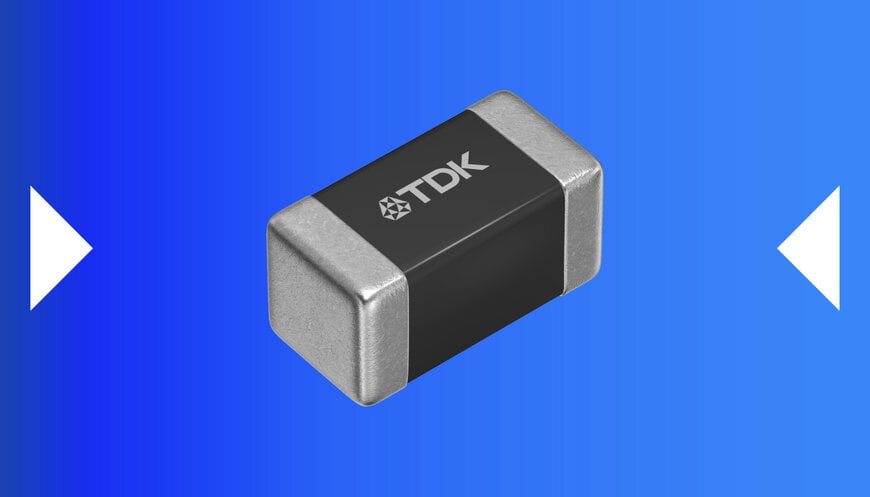
In consumer electronics such as smartphones, tablets, and wearable devices, maintaining audio signal integrity while suppressing electromagnetic interference (EMI) is a persistent design challenge. TDK Corporation addresses this with a new series of ultra-miniature noise suppression filters designed for high-frequency environments, particularly in applications combining audio transmission with wireless communication.
The newly introduced MAF0603GWY series, measuring 0.6 mm × 0.3 mm × 0.3 mm, targets compact devices where board space is limited. Mass production is scheduled to begin in April 2026. These filters are engineered to mitigate noise generated along audio lines that can interfere with antennas and reduce receiver sensitivity in systems operating across Bluetooth, Wi-Fi, and 5G frequency bands.
High-frequency noise suppression beyond 5 GHz
Unlike conventional chip beads commonly used for EMI suppression, the new filters provide effective attenuation in frequency ranges exceeding 5 GHz. With impedance values reaching up to 3220 Ω at 5 GHz, the components are designed to suppress high-frequency noise that can degrade wireless communication performance in densely integrated devices.
This capability is particularly relevant for modern mobile and wearable systems that operate across multiple bands, including 2.4 GHz, 5 GHz, and emerging higher-frequency communication standards. By reducing electromagnetic interference at these frequencies, the filters help maintain stable connectivity and signal clarity.
Low-distortion ferrite material preserves audio quality
A key technical development in the MAF0603GWY series is the use of a proprietary low-distortion ferrite material. Traditional noise suppression components, such as chip beads, can introduce variations in audio-line characteristics, leading to audible distortion.
The new material minimizes these variations, allowing the filter to suppress noise while maintaining the integrity of the audio signal. This is particularly important in applications such as voice calls, media playback, and wearable audio devices, where sound quality directly affects user experience.
Lower resistance supports wider dynamic range
In addition to improved noise attenuation, the filters are designed with lower electrical resistance compared to conventional solutions. This reduces signal loss along the audio path, enabling a wider dynamic range and more accurate signal reproduction.
For engineers, this balance between EMI suppression and signal preservation addresses a common trade-off in compact device design, where filtering components must not compromise performance.
Positioning within EMI filter technologies
Within the category of EMI suppression components for audio lines, alternatives such as multilayer chip beads from manufacturers like Murata Manufacturing and Taiyo Yuden are widely used. These components offer effective noise suppression but may introduce higher signal distortion depending on the application.
The MAF0603GWY series differentiates itself through its combination of high-frequency attenuation above 5 GHz and reduced impact on audio signals, enabled by its ferrite material design and lower resistance characteristics.
Applications in compact connected devices
The filters are intended for integration into smartphones, tablets, and wearable devices where audio lines coexist with high-frequency communication modules. Typical use cases include Bluetooth audio systems, Wi-Fi-enabled devices, and 5G-capable electronics, where EMI control is critical for both communication reliability and audio performance.
By combining miniaturization with improved electrical characteristics, the new filters support the ongoing trend toward more compact and multifunctional consumer electronics.
Edited by Natania Lyngdoh, Induportals Editor — Adapted by AI.
www.tdk.com
