
electronics-journal.com
06
'26
Written on Modified on
BeStar Technologies Explains PZT Sensors for Tap-to-Open Systems
BeStar explains via DigiKey how PZT piezoelectric sensors enable reliable knock detection for automotive smart access systems.
www.digikey.com
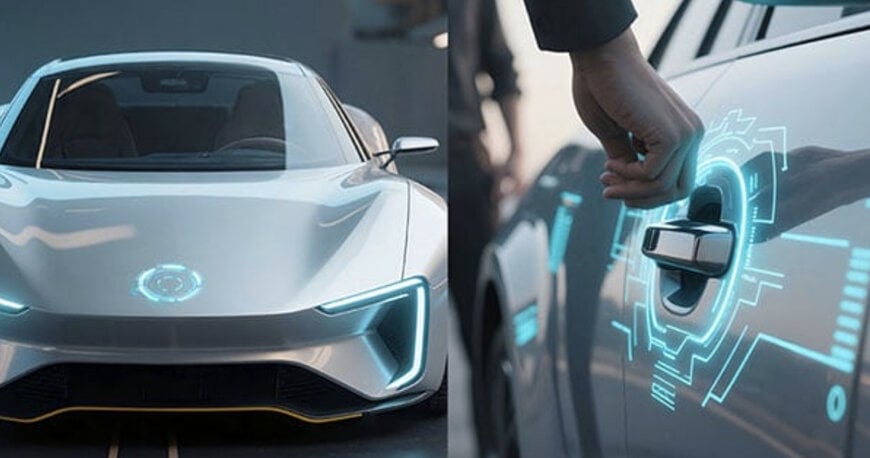
Piezoelectric sensors for automotive access and smart interaction
In automotive electronics, smart furniture, and industrial human-machine interfaces, manufacturers increasingly replace mechanical switches with touch- or tap-activated systems. An article by BeStar Technologies, published on DigiKey, explains how PZT piezoelectric ceramics enable reliable knock-sensing technology used in modern tap-to-open access systems.
These systems detect intentional taps on vehicle panels or surfaces and convert mechanical vibrations into electrical signals that trigger electronic actions such as opening a trunk, deploying door handles, or unlocking compartments. Compared with traditional switches, such sensing systems reduce mechanical wear and allow designers to integrate invisible user interfaces into vehicle body panels or other structures.
Detecting mechanical vibrations through panel structures
Tap-to-open systems rely on knock sensors that detect vibration waves generated when a user taps a surface. When a finger strikes a metal or composite panel, it produces a mechanical wave that propagates through the material.
The wave itself is not visible but carries energy that can be detected by sensors mechanically coupled to the structure. Each intentional tap produces a vibration signature defined by its frequency, amplitude, and duration. Signal processing algorithms analyze these characteristics to distinguish deliberate user interaction from background vibrations.
Vehicles experience continuous vibration sources, including road shocks, wind forces, rain impact, and automated car-wash systems. For reliable operation, the sensing system must differentiate these background signals from intentional taps.
PZT piezoelectric ceramics as sensing elements
Lead zirconate titanate (PZT) is a piezoelectric ceramic material widely used in vibration sensing applications. When mechanical stress deforms the crystal structure of PZT, the material generates an electrical voltage proportional to the applied force.
This direct piezoelectric effect allows very small mechanical vibrations to be converted into measurable electrical signals. The response occurs instantaneously, enabling real-time detection of tap events even through multilayer vehicle panels.
The material properties of PZT can be tuned by adjusting the proportions of lead, zirconium, and titanium in the ceramic formulation. Different compositions provide variations in piezoelectric sensitivity, temperature stability, and mechanical durability, allowing sensor designers to optimize devices for specific environments.
Sensitivity for multi-layer vehicle panels
Automotive body panels typically consist of multiple layers, including the outer metal or composite skin, structural reinforcement elements, acoustic insulation materials, and interior trim. Mechanical vibrations attenuate as they pass through these layers.
PZT sensors provide sufficient sensitivity to detect tap signals transmitted through several centimeters of material. Their high piezoelectric coefficient allows them to generate measurable electrical outputs even from small vibration forces in the millinewton range.
This sensitivity enables reliable detection of taps through vehicle doors, trunk lids, and interior panels without requiring direct contact with exposed sensors.
Passive operation and low standby power
Another advantage of PZT-based sensors is their passive operating principle. Because the sensor itself generates electrical signals when mechanical stress is applied, it does not require continuous electrical power to detect input.
This characteristic is particularly relevant in electric vehicles, where minimizing standby current helps preserve battery charge when the vehicle is parked. The sensor remains inactive until a mechanical input occurs, while the associated signal-processing electronics can operate in low-power standby modes.
Compact sensor integration behind panels
PZT ceramic elements are typically very thin, often less than one millimeter thick, enabling integration behind panels without visible design changes. This allows manufacturers to implement hidden user interfaces without modifying the external appearance of the product.
Engineers can position sensors in locations that optimize mechanical coupling with the surface while preserving vehicle styling. Multiple sensors can also be distributed across a panel to create larger sensing areas or enable location-specific commands.
Temperature stability for automotive environments
Vehicles operate across wide environmental temperature ranges. In extreme climates, external vehicle panels may experience temperatures from –40 °C to above 80 °C.
Automotive-grade PZT ceramics are formulated to maintain stable piezoelectric properties across these conditions. While the magnitude of the piezoelectric response may vary slightly with temperature, signal-processing algorithms compensate for these variations to maintain consistent sensitivity.
Application examples beyond automotive systems
The article highlights several application scenarios where PZT knock sensors are used.
In electric vehicles, tap-to-open systems can enable hands-free opening of a front trunk (frunk). A user can tap the hood with a knee or foot while carrying items, and the sensor detects the vibration. The vehicle control system verifies the presence of an authorized key and activates the latch.
Hidden door handle systems represent another automotive use case. Flush door handles improve aerodynamics and aesthetics but require an alternative method to initiate opening. Knock sensors detect a tap on a designated door panel area and trigger handle deployment.
Beyond automotive applications, similar sensing technology can be used in smart furniture or secure storage systems. Cabinets with concealed handles can open via a tap on the surface, while safes may use tap patterns detected by PZT sensors as an alternative authentication method.
Enabling intuitive user interfaces
PZT-based knock sensing allows designers to replace mechanical switches with surface-integrated interaction methods. By detecting mechanical vibrations through structural materials, the technology enables invisible user interfaces while maintaining reliability in demanding environments.
As automotive manufacturers continue to explore new human-machine interfaces and minimalist vehicle designs, vibration-based sensing systems using piezoelectric ceramics are becoming an important enabling technology for modern smart access solutions.
www.digikey.com
