
electronics-journal.com
06
'26
Written on Modified on
Polyarylethersulfone Thermoplastics for High-Density Electrical and Electronic Assemblies
BASF expands its Ultrason polyarylethersulfone portfolio to improve thermal management and signal integrity in data centers and e-mobility.
www.basf.com
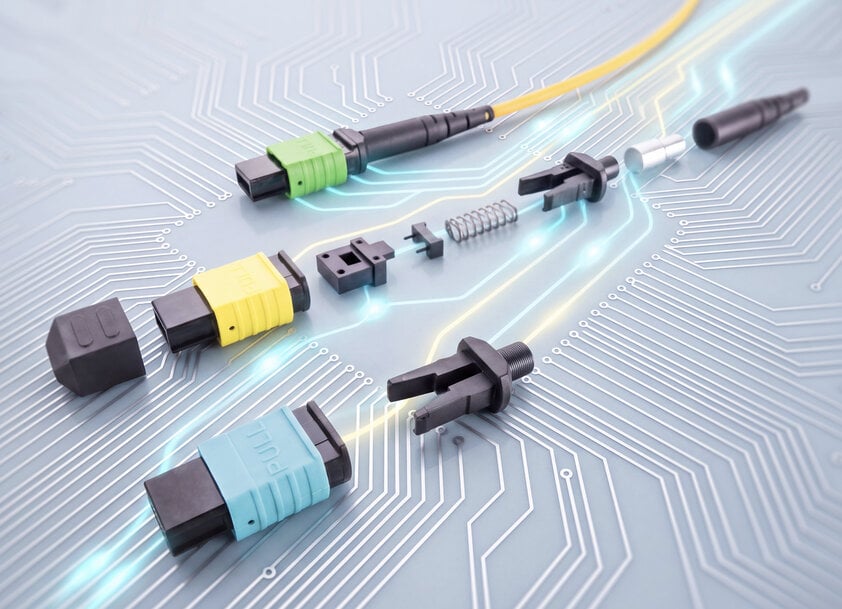
Increasing power density in artificial intelligence processing clusters and high-voltage vehicle architectures creates severe thermal, electrical, and dimensional stresses on structural polymers. To address these operating constraints in next-generation power distribution and data transmission systems, BASF expanded the targeted electrical and electronic applications of its Ultrason polyarylethersulfone portfolio, encompassing polyethersulfone, polysulfone, and polyphenylsulfone resin chemistries.
Engineering Demands of High-Density Electronic Architectures
Signal transmission lines and power distribution assemblies in artificial intelligence computing facilities operate under sustained thermal dissipation loads and dense physical packaging. As electronic subassemblies undergo physical miniaturization, polymer housings and insulating layers must maintain tight dimensional tolerances, resist electrical tracking, and retain mechanical stiffness without deformation at elevated operating temperatures.
The Ultrason thermoplastic resin range includes Ultrason E polyethersulfone, Ultrason S polysulfone, and Ultrason P polyphenylsulfone. These amorphous thermoplastics exhibit elevated glass transition points, high continuous service temperatures up to 180°C, and consistent dielectric behavior across broad thermal bands.
The polymer matrix provides inherent flame retardancy without requiring halogenated additive packages. In addition, the material delivers hydrolytic stability and chemical resistance against polar solvents, functional coolants, and synthetic lubricants, enabling equipment longevity in demanding computing centers and automotive battery platforms.
Precision Fiber Optic Connectors and Mold Flow Optimization
High-speed interconnects deployed across distributed server networks require strict dimensional tolerances to ensure continuous optical alignment and minimize insertion losses. Lucent connectors and multi-fiber push-on connectors require materials that flow into complex, thin-walled tooling while retaining structural integrity after demolding.
Ultrason E polyethersulfone balances high tensile stiffness and mechanical toughness with low melt viscosity formulations. This flow behavior enables the injection molding of micro-scale structural features without core shift or anisotropic shrinkage. The low thermal expansion of polyethersulfone prevents temperature-induced dimensional drift, keeping individual optical fiber ferrules aligned during thermal cycling inside dense computing chassis.
Wire Insulation and Perfluoroalkyl Substance Substitution
Power distribution inside electric vehicle drive units and step-down power transformers involves elevated conductor temperatures and direct fluid immersion. Ultrason P polyphenylsulfone provides an extrusion-grade thermoplastic layer for copper and aluminum magnet wire insulation and protective cable jackets.
The polyphenylsulfone formulation operates continuously in dielectric cooling fluids and transformer oils at temperatures reaching 200°C. Due to its balanced elongation at break, continuous electrical insulation resistance, and resistance to environmental stress cracking, polyphenylsulfone serves as an engineering replacement for fluoropolymer materials containing per- and polyfluoroalkyl substances (PFAS), supporting compliance with evolving global chemical restrictions.
Thermal Management Components and Processing Methodologies
Liquid cooling infrastructure and air-handling subsystems require structural components that resist degradation from circulating heat-transfer fluids. Ultrason resins provide mechanical strength and creep resistance for fluid manifolds, diagnostic sensor housings, pipe connectors, and high-efficiency fan impellers.
To accelerate industrial implementation, BASF supplies custom rheological grades spanning high-flow formulations for injection molding to high-melt-strength polymers suited for industrial profile extrusion. The resin can be formulated across transparent, translucent, and opaque color specifications to support color-coded system wiring and connector identification.
At the Fakuma trade fair in Friedrichshafen, Germany, BASF presented these technical application concepts at hall 4, booth B4-4303.
Additional Context:
This section details technical specifications and competitive benchmarking not included in the original product announcement.
Polyarylethersulfones (PAES) occupy an intermediate performance and cost tier among high-temperature engineering thermoplastics, positioned between semi-crystalline engineering polymers such as polyamides (PA66) or polybutylene terephthalate (PBT) and ultra-high-performance polymers like polyetheretherketone (PEEK) and polyetherimide (PEI).
Polysulfone exhibits a glass transition temperature of approximately 185°C to 190°C, polyethersulfone reaches roughly 225°C, and polyphenylsulfone exhibits a glass transition point of approximately 220°C with notched Izod impact strength values exceeding 600 J/m. In contrast to semi-crystalline PEEK, which exhibits significant anisotropic mold shrinkage (typically 1.0 to 1.5 percent), amorphous polyarylethersulfones display isotropic shrinkage rates of approximately 0.5 to 0.7 percent, preventing warpage in precision injection-molded components such as optical ferrules and multi-pin terminal blocks.
In fiber optic multi-fiber push-on connectors, polyethersulfone competes directly with polyetherimide (such as SABIC Ultem) and polyphenylene sulfide (PPS). While polyetherimide provides high tensile modulus (approximately 3,200 MPa unreinforced), polyethersulfone grades offer lower melt viscosity at equivalent processing temperatures (340°C to 380°C), facilitating the filling of high-cavity molds with wall thicknesses below 0.3 millimeters.
For high-temperature magnet wire insulation in traction motors and data center power conversion equipment, extruded polyphenylsulfone serves as an alternative to fluorinated ethylene propylene (FEP) and polytetrafluoroethylene (PTFE) tapes. Unlike standard fluoropolymers, polyphenylsulfone eliminates halogen-driven corrosion of extrusion tooling and copper conductors while meeting UL 94 V-0 flammability classifications down to thin wall dimensions without chemical flame-retardant additives.
Edited by Natania Lyngdoh, Induportals editor, with AI assistance.
www.basf.com
