
electronics-journal.com
02
'26
Written on Modified on
Image signal processor integration for arthroscopy imaging
Omnivision ISP integration targets stable colour reproduction and low-latency processing in endoscopic visualization platforms used in minimally invasive surgical imaging workflows.
www.ovt.com
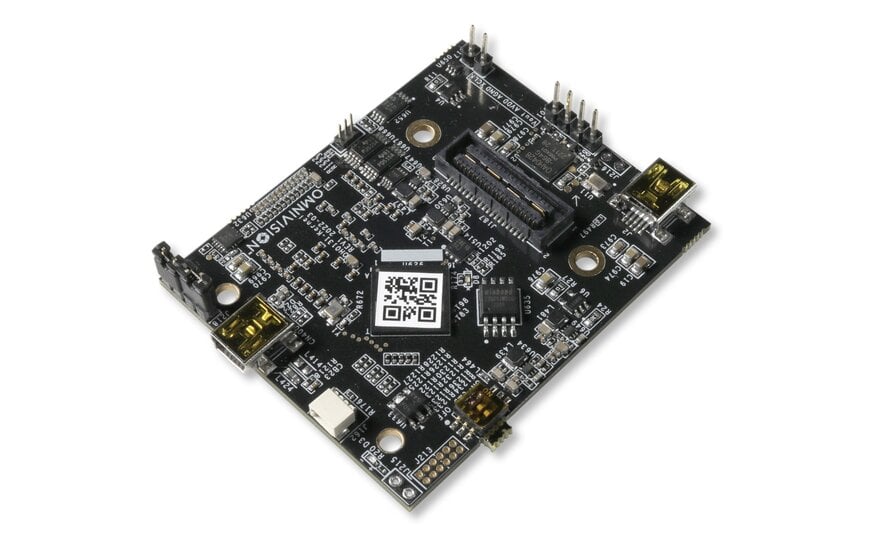
Medical imaging systems used in minimally invasive procedures depend on consistent colour reproduction and low-latency video processing to support clinical decision-making. In this context, Omnivision introduced the OVMed® OH0131 image signal processor (ISP) in collaboration with ATL Medical for integration into the PREVOYANCE® Complete Imaging System for arthroscopy camera platforms.
Imaging subsystem integration for surgical visualization platforms
The PREVOYANCE® system from ATL Medical is designed as a turnkey medical visualization platform intended for OEM medical device manufacturers seeking to shorten development cycles for endoscopic and arthroscopic imaging systems. The platform can be deployed as a white-label system or integrated into existing surgical imaging architectures.
The imaging assembly is typically combined with a camera control unit (CCU) responsible for image processing, visualization and storage. The OVMed® OH0131 ISP is designed to operate either within such CCUs or in portable tablet-based visualization systems.
The processor supports multi-image configurations and incorporates image processing functions such as brightness, contrast, saturation, hue and sharpness adjustment, along with noise-reduction algorithms intended to maintain image stability under variable lighting conditions commonly encountered in medical imaging.
Signal processing challenges in endoscopic imaging
Image signal processors used in endoscopy and arthroscopy must address several technical constraints, including specular reflections from tissue surfaces, visual obstruction from smoke or fluids, shadowing effects and fluctuating illumination.
Technical requirements typically include maintaining low processing latency, handling continuous high-bandwidth image streams and enabling automated feature detection functions that support visualization during complex procedures. These requirements are directly linked to broader trends in digital medical imaging and embedded vision processing.
Hardware architecture linking sensor processing and display
The jointly developed imaging architecture consists of a kernel board and a host processing system.
The kernel board, designed by OMNIVISION, integrates the OVMed® OH0131 medical ISP, which receives raw image data from image sensors, performs signal processing and transmits processed image data via a MIPI interface.
The host system, developed by ATL Medical, receives the processed data and manages visualization through an HDMI display interface. This separation of image processing and system control functions reflects a modular embedded vision design approach often used in medical electronics.
Compliance, sensor compatibility and interface support
The OVMed® OH0131, introduced in 2023, complies with several medical and electronics standards including ISO 13585, RoHS, REACH, IEC 60601 (covering ESD, EMC, EMI and electrical isolation) and EMS ISO 9001.
The ISP supports OMNIVISION medical image sensors ranging from 2-megapixel resolution down to 200 × 200 pixel formats and is compatible with the company’s AntLinx® CMOS chip-on-tip endoscopy imaging technology. Support for MIPI interfaces enables integration into embedded medical vision systems and compact diagnostic imaging platforms.
ATL Medical complements the electronics with system-level integration including optical assemblies, illumination systems, cabling, interconnects, distal-end manufacturing and ergonomic device housing. This system integration approach is intended to reduce engineering complexity for OEMs developing surgical imaging devices while supporting integration into existing platforms.
Edited by industrial journalist Aishwarya Mambet, with AI-assistance.
www.ovt.com
