
electronics-journal.com
01
'26
Written on Modified on
Expanded Heat Sink Portfolio Targets Thermal Management Optimization
Würth Elektronik introduces modular heat sink families to improve thermal management efficiency in power electronics, embedded systems, and industrial applications.
www.we-online.com
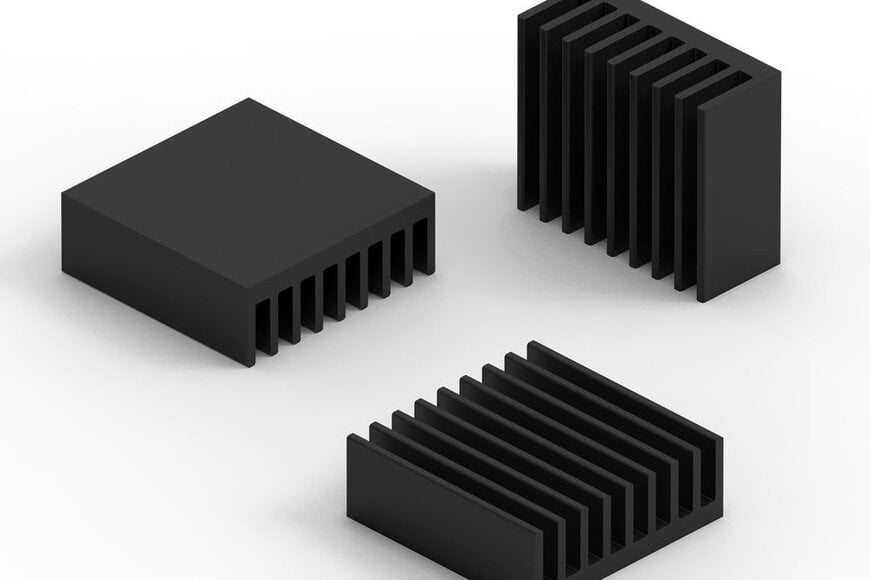
Würth Elektronik has extended its passive component portfolio with a structured range of heat sinks designed to address thermal management constraints in power electronics, embedded processing, and DC/DC conversion systems. The portfolio introduces multiple mechanical configurations and pre-applied interface materials to improve heat dissipation and simplify system integration.
Portfolio Structure and Application Scope
The expanded range is organized into three product families addressing distinct mounting and thermal interface requirements. The WE-HTO series targets through-hole packages such as TO-220 and TO-247, which are commonly used in discrete power semiconductors. These components are widely deployed in industrial power supplies, automotive subsystems, and motor control applications where efficient thermal dissipation directly affects reliability and operating lifetime.
The WE-HIC family is designed for flat-surface components, including processors and power modules such as DC/DC converters. These heat sinks are dimensioned for compact electronic assemblies, with available sizes ranging from 20 × 20 mm to 40 × 40 mm, supporting typical embedded and high-density board layouts.
Variants labeled WE-HTOI and WE-HICI integrate factory-applied thermal interface material. This design eliminates air gaps between the semiconductor package and the heat sink surface, reducing thermal contact resistance. By improving the conduction path, these variants support higher heat transfer efficiency without requiring manual application of interface materials during assembly, which can reduce process variability in volume production.
Design Parameters and Thermal Performance
The WE-HTO series is available in multiple geometries and surface structures, including flat and curved sheet metal designs as well as finned configurations. The use of fins increases the effective surface area, enhancing convective heat transfer. This is particularly relevant in systems where passive cooling dominates or where airflow is limited.
For the WE-HIC family, two fin configurations are provided to match airflow conditions. Continuous fins are optimized for environments with directed airflow, enabling more efficient heat removal along a defined flow path. Interrupted fin structures, by contrast, are intended for installations where airflow direction is variable or turbulent, maintaining consistent thermal performance under less predictable cooling conditions.
The availability of compatible mounting hardware, including M3 screws, nuts, and insulating sleeves, supports mechanical integration and electrical isolation requirements. This is critical in power electronics applications where heat sinks may also need to maintain dielectric separation from active components.
Integration into Thermal Design Workflows
In addition to hardware, Würth Elektronik provides thermal characterization data and simulation support, enabling engineers to model heat dissipation within system-level designs. This aligns with design methodologies in the automotive data ecosystem and industrial electronics, where thermal behavior must be validated early in the development cycle to ensure compliance with reliability and performance targets.
Customer-specific modifications are also supported, allowing adaptation of heat sink geometry or materials to application-specific constraints such as enclosure size, airflow conditions, or power density requirements.
Relevance for System-Level Performance
Thermal management remains a limiting factor in the performance and lifetime of electronic systems, particularly in high-power-density applications. By reducing thermal resistance and improving heat transfer efficiency, the new heat sink portfolio supports stable operating temperatures, which in turn helps maintain electrical performance parameters and reduces component degradation over time.
The integration of pre-applied thermal interface materials and multiple airflow-optimized geometries reflects a design approach focused on minimizing assembly complexity while addressing increasingly stringent thermal constraints in modern electronic systems.
Edited by Evgeny Churilov, Induportals Media - Adapted by AI.
www.we-online.com
