
Nanocrystalline Core Inductors for High-Frequency Power Converters
Würth Elektronik outlines how advanced magnetic materials and flat wire geometries mitigate core and winding losses in modern wide-bandgap semiconductor switching regulators.
www.we-online.com
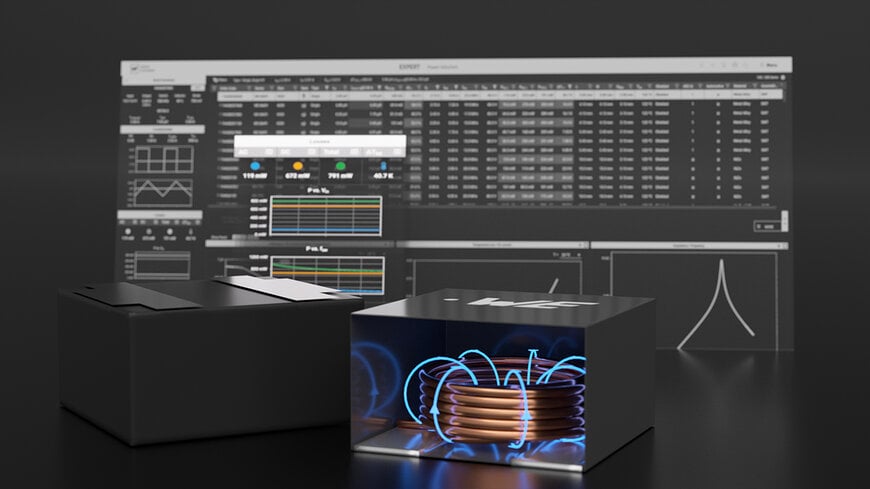
The integration of wide-bandgap semiconductors such as Silicon Carbide (SiC) and Gallium Nitride (GaN) into electronic systems enables power supplies to operate at higher switching frequencies in the megahertz range. This transition facilitates the use of smaller passive components, increasing power density and overall efficiency in industrial, telecommunications, and automotive applications. However, maximizing the efficiency of these compact DC/DC converters requires specialized low-loss power inductors capable of managing elevated thermal and magnetic loads.
Efficiency Parameters in Power Conversion
The efficiency of a power converter is determined by the ratio of output power to input power. Power that is not transferred to the output is dissipated as heat, limiting the maximum power density, necessitating additional thermal management, and affecting component reliability. The losses in power inductors primarily originate from two sources: core material losses and winding losses. Core losses are driven by magnetic hysteresis and eddy currents, which scale with the core electrical resistivity, magnetic flux density, ambient temperature, and the converter switching frequency. Winding losses consist of direct current resistance in the copper windings and alternating current losses resulting from skin and proximity effects. At the high switching frequencies characteristic of modern converters, alternating current losses become the dominant factor, requiring precise geometric and material optimization.
Empirical Loss Modeling and Component Selection
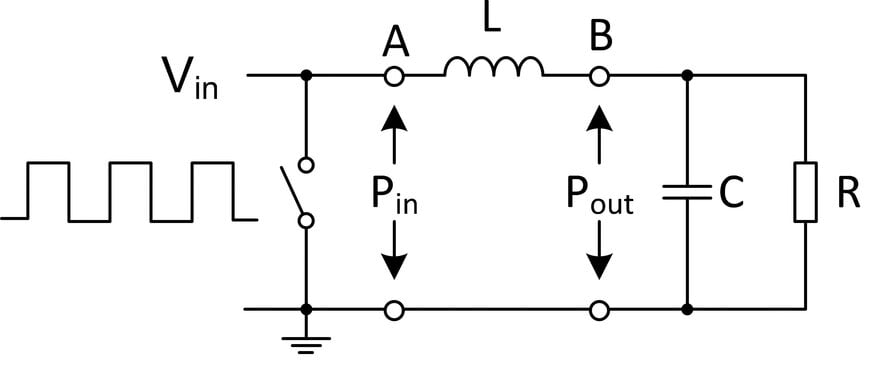
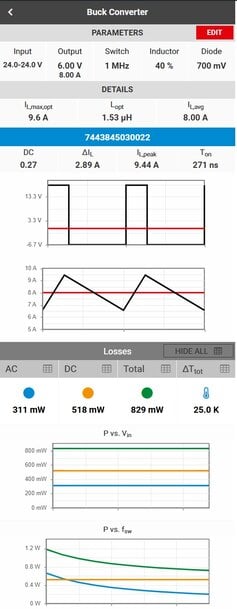
Accurate loss quantification is critical for predicting temperature rise and selecting appropriate magnetic components. Würth Elektronik utilizes a real-time application setup to isolate and calculate total inductor losses, separating them into alternating current and direct current components. The empirical data is gathered using a DC/DC converter setup where a pulsed voltage is applied to the inductor, allowing for the direct measurement of input and output power. The total power loss is the difference between input and output power, from which the alternating current coil losses are extracted. This data informs the REDEXPERT empirical calculation model, which computes alternating current losses based on specific operational parameters such as input voltage, output voltage, switching frequency, duty cycle, and output current.
Microstructure Advancements in Magnetic Cores
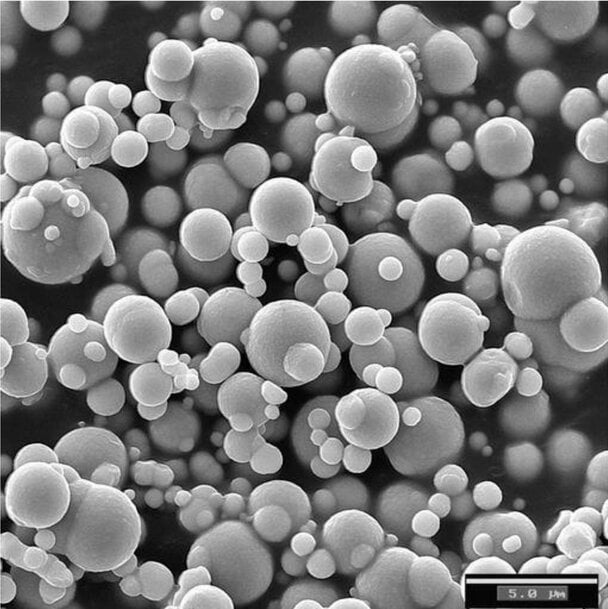
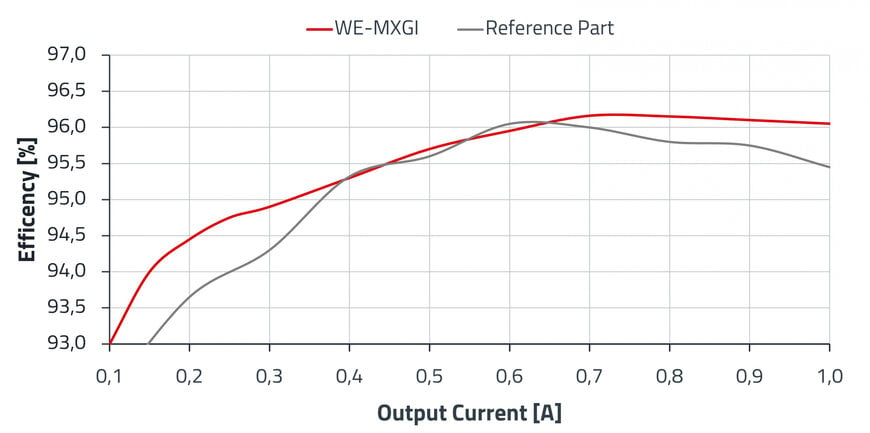
Molded power inductors traditionally utilize fine metal powders, such as pure iron or iron alloys coated in insulating material, pressed around an enameled copper winding. The distributed air gap in these structures ensures uniform magnetic flux, yielding high saturation currents. Recent developments have shifted toward amorphous and nanocrystalline materials to further reduce core losses. Nanocrystalline materials contain crystalline grains measuring 10 to 100 nanometers embedded within an amorphous matrix. This specific microstructure yields high magnetic permeability, low coercivity, and lower magnetic losses compared to conventional crystalline magnetic alloys. Inductors utilizing these nanocrystalline alloys, such as the WE-MXGI series, maintain lower operating temperatures and higher efficiency across varying output currents by minimizing hysteresis losses at high frequencies.
Winding Geometry and Flat Wire Technology
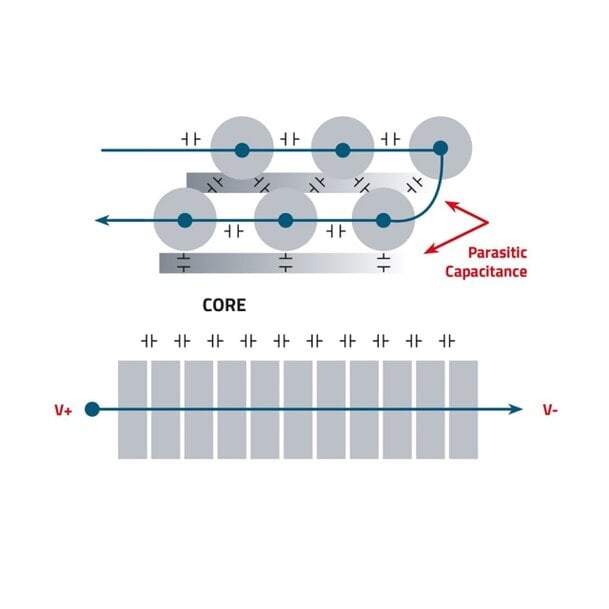
Beyond core material formulation, winding geometry directly influences total component loss. In high-frequency applications, flat wire windings are utilized to optimize the conductor cross-section. The larger surface area of a flat wire mitigates current crowding and distributes the electric field more uniformly than standard round wire. This geometry reduces parasitic capacitance and limits electromagnetic interference at the source. Furthermore, flat wire architectures achieve lower direct current resistance, which minimizes standard conduction losses. Components integrating nanocrystalline core mixtures with flat wire technology, including the WE-PMFI and WE-XHMI Performance series, provide optimized thermal profiles for both space-constrained environments and high-current multiphase power supplies.
Integration and Manufacturing Developments
Ongoing development in magnetic components focuses on combining magnetic powders with polymer binder systems. This manufacturing process supports functional integration and miniaturization suitable for compact DC/DC converters facing strict weight and volume constraints. A parallel manufacturing approach produces monolithic, low-profile inductors by integrating the magnetic core and the conductor directly. This structural integration is engineered for complex multiphase power supply architectures found in high-performance computing platforms and data centers, delivering low inductance for rapid transient response while sustaining high saturation currents and low direct current resistance across wide operating temperature ranges.
Additional Context: This section details technical specifications and competitive benchmarking not included in the original product announcement.
In the broader context of high-frequency power electronics, the shift from traditional ferrite cores to nanocrystalline and amorphous metal alloys is driven by saturation limits. Traditional ferrite cores offer low electrical conductivity, which minimizes eddy current losses at high frequencies, but they typically saturate at lower magnetic flux densities, generally between 0.3 and 0.5 Tesla. In contrast, nanocrystalline materials can achieve saturation flux densities exceeding 1.2 Tesla while maintaining comparable high-frequency loss profiles. This allows engineers to design inductors with smaller physical volumes for equivalent current ratings. Furthermore, the thermal stability of nanocrystalline cores extends operational temperature ranges up to 155 degrees Celsius or higher without significant degradation in magnetic permeability, a metric where standard ferrites often exhibit steep performance drop-offs. Competitive benchmarking across the industry indicates that combining these advanced core materials with flat-wire winding structures can yield a 10 to 15 percent reduction in total DC/DC converter power losses compared to equivalent round-wire, ferrite-based inductors operating at frequencies above 1 megahertz.
Edited by an industrial journalist, Lekshman Ramdas, with AI assistance.
www.we-online.com
